Operations | Monitoring | ITSM | DevOps | Cloud

Back to work: IT monitoring best practices

Work remains work, regardless of the location. Working remotely has become the new normal, but some organizations have started to return to their office workspaces, albeit with a minimal workforce. Though going back to work may not be as difficult as adapting to remote work instantly, certain operational challenges are unavoidable; for example, monitoring workspace infrastructure is nothing new, but managing different locations simultaneously has yet to become customary.
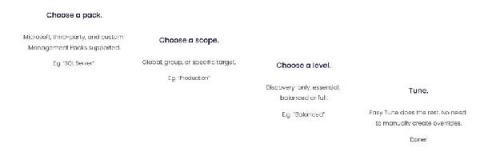
Announcing Easy Tune 2.0 - Everyday Tuning Made Easy

We know that tuning your SCOM alerts can be a time consuming and arduous task! That’s why the release of Easy Tune 2.0 bring with it not only, new improved features and functionality, but also a more user friendly, customer-focused portfolio of tuning packages. Our new suite of tuning products is designed to suit any business from low-budget SMEs to large scale enterprises, with endless tuning requirements.

Linux Server Performance Metrics to Monitor

Linux is one of the most popular and widely used open-source operating systems in the world today. It provides the key advantage of stability, compatibility, security and customization. Since Linux servers are the backbone of an organization’s IT infrastructure, a sudden change in the CPU usage or memory can adversely affect the performance of applications.

Extend Your Fortinet FortiManager to Kubernetes

Companies are leveraging the power of Kubernetes to accelerate the delivery of resilient and scalable applications to meet the pace of business. These applications are highly dynamic, making it operationally challenging to securely connect to databases or other resources protected behind firewalls.

Checklist for Application Performance and Availability

Given the increasing complexity of network architecture and IT infrastructure, application performance management (APM) solutions have become a critical element in the toolbox of IT managers, DevOps, and developers. And, for good reasons. APM can pay handsome dividends in terms of quickly resolving bandwidth constraints, availability issues, and enhancing the credibility of your business.

Docker Compose, introduction to container orchestration with Pandora FMS

We continue with our series of articles on containers. First, we started with creating our own images with Docker Build and saw how to run them with Docker run. But today we will learn what Docker Compose is and start our journey into the world of container orchestration. Up to now we have managed containers manually and separately, which for some specific test may be valid and functional. But when the number of containers to manage starts growing, this method becomes infeasible.

Add flexibility to your data science with inference pipeline aggregations

Elastic 7.6 introduced the inference processor for performing inference on documents as they are ingested through an ingest pipeline. Ingest pipelines are incredibly powerful and flexible but they are designed to work at ingest. So what happens if your data is already ingested? Introducing the new Elasticsearch inference pipeline aggregation, which lets you apply new inference models on data that's already been indexed.

Getting started with Elastic Workplace Search on Elastic Cloud

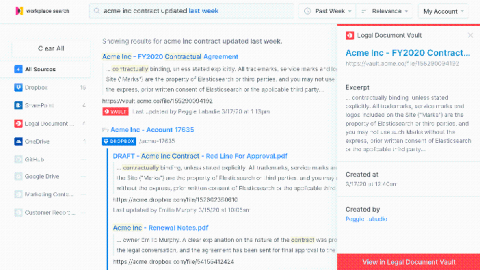
Chances are you already spent a big part of your day looking for a document, an email, or an answer that lies deep within a Google Slides presentation. Thankfully, you landed in the right place. With Workplace Search, finding the right information across all your cloud and on-premises data platforms is now easier than ever, and it’s a few clicks closer than you expect.

DevOps/SRE Model: Bursting the Developer's Bubble. Here's the CTO Perspective.

Many organizations are transitioning toward a DevOps operational model, where software developers are responsible for operating the applications they develop, instead of a centralized IT operations group. In this “CTO Perspective” interview we talk to BigPanda’s CTO Elik Eizenberg about the challenges in that transition, and what it takes to make it easier. Lean back and watch the interview, or if you prefer reading, take a few minutes to read the transcript.