Testing within the CI/CD pipeline, also known as shift-left testing, is a devops best practice that enables agile teams to continually assess the viability of new features at every stage of the development process. Running tests early and often makes it easier to catch issues before they impact your users, reduce technical debt, and foster efficient, cross-team collaboration.
The Datadog Partner Network (DPN) is a rapidly growing registry of hundreds of leaders in the cloud service industry who choose Datadog to meet their infrastructure-monitoring needs. Partners are well-acquainted with the more than 400 technology integrations available to Datadog customers, but with the huge diversity in technical stacks used by our customers, there’s always demand for more customization and flexibility.
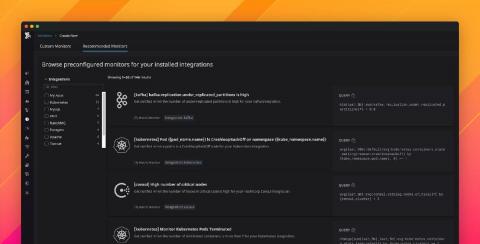
Datadog’s more than 400 integrations collect monitoring data from across your entire stack, giving you full visibility into the health and performance of your applications and infrastructure. Alerts are a crucial part of any monitoring workflow, as they draw your attention to problems in your system before they affect your users. But whether you’re migrating to a new environment or integrating a new technology into your stack, it’s not always clear what data you should alert on.
During my career, I’ve taken part in many on-call rotations and post-mortems. The longest on-call rotation I’ve ever had — no breaks, vacations, or holidays — lasted for a whopping 2.5 years at Lucid Software. I’m jaded. I strongly prefer stability to tinkering with shiny new toys. Very few software engineers start this way, but enough of them make the transition after having been bit enough times by a bad release.
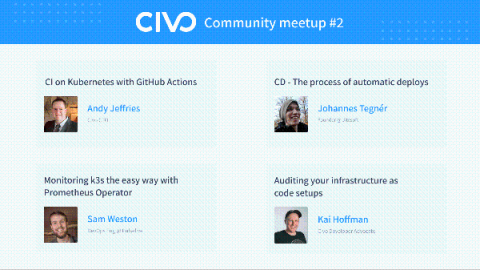
For our second community meetup we focussed on using Civo for CI/CD through GitOps and Github actions for cloud native application development This installment featured talks from our CTO Andy, our Developer Advocate Kai, and guest talks from community members Sam Weston and Johannes Tegnér. The talks touched on a wide variety of topics within CI/CD, from automating builds to monitoring and observability. Here's what was on the agenda...
Interviewing for a new job and finding your right fit is tough enough, not to mention the added stress of interviewing during the COVID-19 pandemic. As stated on our Careers Page, our process is pretty consolidated and we move quickly (you have to when you’re a growing tech company).
If you know anything about WebAssembly (WASM), it’s probably that WASM lets you execute code compiled from languages such as C, C++, Rust, or others in the browser at almost native speeds. You might be less familiar with the fact that WASM is not only an interesting technology in the browser, but also in other environments that require fast sandboxing. As such, WASM has found some popularity with edge computing and as a lightweight docker replacement for certain situations.
Discover what registry scanning is, how it helps with shifting security left, and how you can implement it using Harbor and Sysdig. Shifting security left is all about moving security to the earliest possible moment in the development process, dramatically improving “time to fix” and security impact. In this article, we’re going to show you how to shift left with Harbor registry and Sysdig Secure.
In the pre-Kubernetes, pre-container world, backup and recovery solutions were generally implemented at the virtual machine (VM) level. That works for traditional applications when an application runs on a single VM. But when applications are containerized and managed with an orchestrator like Kubernetes, this system falls apart. That means effective disaster recovery (DR) plans for Kubernetes must be designed for containerized architectures and natively understand the way Kubernetes functions.