
Operations | Monitoring | ITSM | DevOps | Cloud

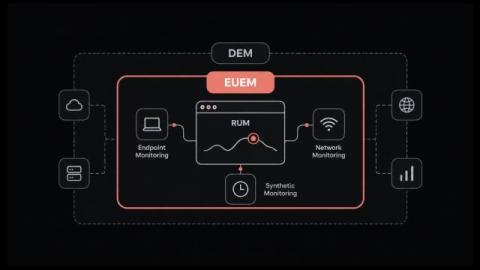
What is End User Experience Monitoring (EUEM)? How It Relates to RUM and DEM

Why do tickets about a slow application keep arriving while every server, link and service check reports normal? That mismatch is the problem end user experience monitoring exists to solve. A healthy server is one thing, but the business notices something else: whether people can finish their work or complete a purchase without delays or errors. Monitoring in most IT operations groups was built to watch the systems from the inside, so it reports CPU load, memory and uptime.

WAN Link Monitoring for Faster Branch Troubleshooting

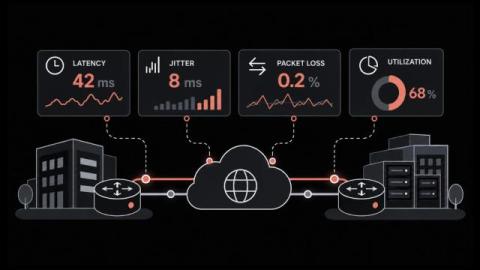
Why do users at a branch complain about choppy calls and stalled apps when every WAN circuit on the dashboard still shows up? A link can be reachable without being healthy. Delay and packet loss can rise for hours on a live circuit, and a simple up-or-down check will report nothing unusual the whole time. WAN link monitoring checks the quality of each site-to-site connection by having routers send their own test packets and time the replies.

Spin up a full-stack preview environment in seconds, zero config

A pull request goes up. The reviewer wants to see it running, not just read the diff, so someone pings the team: can I get an environment for this? Depending on who's around, that could take an hour. It could take until tomorrow. By the time the environment exists, the reviewer has moved on to something else, and getting their attention back is its own task. What if the preview URL was already sitting in the PR before anyone had to ask?

How PDF-to-Word.io Helps Operations Teams Update Legacy Documentation

Operations teams depend on current documentation. Standard operating procedures, incident runbooks, supplier manuals and compliance instructions may remain in use for years, even as systems and responsibilities change. When the only available copy is a PDF, updating a command, replacing a screenshot or reorganising a procedure can become unnecessarily time-consuming.

How to Build a Reliable PDF Compression Workflow for Operations Teams

A large PDF rarely looks like an operational problem until it blocks a routine task. A report exceeds an email attachment limit. A field technician struggles to open a manual over a mobile connection. A customer portal rejects an uploaded document. Staff then create smaller copies using different tools and settings, often without checking whether the result is still readable.

The Missing Workflow in Global Ecommerce Operations: Visual Asset Localization

A product launch can appear ready in the project tracker while dozens of visual assets remain unfinished. The product page has been translated, but feature labels inside the images are still in the source language. The regional team has approved the campaign copy, yet the latest poster is sitting in a designer's inbox. A product specification changed after three language versions of the manual had already been prepared.

Dock Throughput Math: What Cost-Per-Unit Labor Actually Saves in Container Unloading

Run the numbers on a single container and the labor model behind it starts to look a lot more consequential than most receiving schedules give it credit for. A standard 40 foot container floor loaded with dry goods can take a four person crew anywhere from ninety minutes to three hours to unload, depending on load configuration, pallet mix, and how hard that crew is actually working. Under an hourly billing model, the warehouse pays the same either way if the slower outcome happens. Under a cost-per-unit model, priced by pallet, case, or container, the price is fixed before the forklift ever backs up to the door.

Trading XRP Without Getting Burned: How to Manage Risk When the Market Gets Wild

Let's talk a little about XRP because we find it's one of the most exciting cryptocurrencies to trade. Why? Well, it has deep market interest, a huge global community, and a habit of making surprisingly sharp movements when momentum arrives. Now, let's be clear: that doesn't mean that XRP is the best crypto to trade because sharp moves go both ways when momentum arrives, and at the end of the day it's still a volatile asset. But we find it interesting to trade it because it keeps you on your toes; one moment it's breaking through resistance, and everyone in the market is talking about its next major rally.