Operations | Monitoring | ITSM | DevOps | Cloud

A Year of WebPageTest and Catchpoint: A Q&A with Mehdi Daoudi and Jeena James

As WebPageTest and Catchpoint celebrate one year of partnership, Jeena James, General Manager, WebPageTest, sat down for a Q&A with Mehdi Daoudi, CEO and co-founder, Catchpoint, to look at the key milestones from the last year, and ahead to what's next! Hope you enjoy!

Automating Work in Real Time Through the PagerDuty Operations Cloud

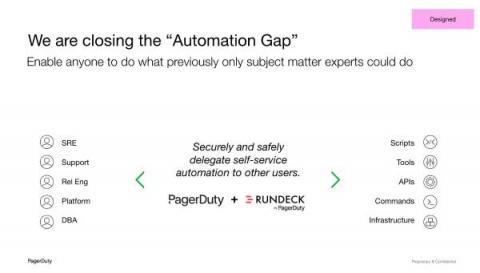
Earlier this fall, we announced a significant evolution in the IT process automation portfolio at PagerDuty—the general availability of PagerDuty Rundeck Actions and early access for Rundeck Cloud. These new offerings reflect our vision to enable companies to take real-time actions by democratizing access to automation. In other words, to quickly and safely delegate automated IT processes to the IT users (and APIs) that need them to get work done.

HoneyByte: Using Application Metrics With Prometheus Clients

Have you ever deep dived into the sea of your tracing data, but wanted additional context around your underlying system? For instance, it may be easy to see when/where certain users are experiencing latency, but what if you needed to know what garbage collection is mucking up the place or which allocated memory is taking a beating? Imagine having a complete visual on how an application is performing when you need it, without having to manually dig through logs and multiple UI screens.

What's New with DX Unified Infrastructure Management 20.4

DX Unified Infrastructure Management (DX UIM) enables comprehensive infrastructure observability. The solution delivers comprehensive coverage, modern administrative and operator consoles, zero-touch configuration, advanced alarm management, and more. This solution provides a unified, data-driven approach to infrastructure management. With the solution, your teams can proactively and efficiently manage all your digital ecosystems, including private and public clouds.

Enabling the Self Driving Cloud with Splunk Observability Cloud and GKE Autopilot

In 2021, any time that you access any kind of web service, whether it be via a website or app, chances are high that the backend is running on Kubernetes. Hundreds of thousands of organizations rely on Kubernetes to power and manage their mission critical services every day, and the reliability and scalability benefits offered by Kubernetes have been felt across the industry.

How Customer Data Models for B2B2C improve customer service

Sharath Lagisetty, senior principal product manager for Customer Workflows at ServiceNow, co-authored this blog. As companies engage with different customers and partners via digital channels, it’s critical to establish a rich understanding of each entity and their relationships, both to the company and to each other. The latest release of ServiceNow® Customer Service Management extends Customer Data Models to support multilevel relationships.

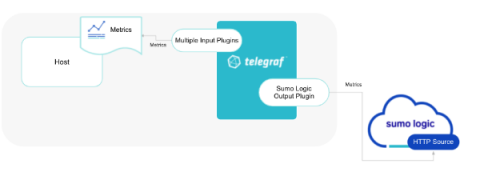
Host and process metrics - monitoring beyond apps

Consumers and users of applications expect near 100% availability and reliability to work, transact, collaborate, etc. There’s a lot of talk about monitoring the performance of the application itself, but what about the underlying systems and components supporting the app, and in particular the infrastructure it sits on? If any piece of this stack fails, it can negatively impact the user experience, and in turn, your business.

Canonical teams with Xilinx to accelerate the development of adaptive SoCs

December 14, 2021: Canonical and Xilinx Inc. announced today the publication of Ubuntu images optimised for Xilinx Zynq UltraScale+ evaluation boards and the production-ready Kria System-on-Modules (SOM). The companies are collaborating to bring enterprise-grade Linux to the world of adaptive SoCs to accelerate the development of new software-defined devices across all IoT verticals.

Data Pipelines Overview

A Data Pipeline is a series of processes that collects raw data from various sources, filters the disqualified data, transforms them into the appropriate format, moves them to the places you want to store them, analyzes them, and finally presents them to your audience. As we can see in the chart above, a data pipeline is analogous to a water flow: data flows from one stage to another while being processed and reshaped.