Operations | Monitoring | ITSM | DevOps | Cloud

Difference Between IPv4 and IPv6: Why haven't We Entirely Moved to IPv6?

IPv4 and IPv6 are the two versions of IP. IPv4 was first released in 1983 and is currently widely used as an IP address for a variety of systems. It aids in the identification of systems in a network through the use of an address. The 32-bit address, which may store multiple addresses, is employed. Despite this, it is the most widely used internet protocol, controlling the vast bulk of internet traffic. IPv6 was created in 1994 and is referred to as the "next generation" protocol.
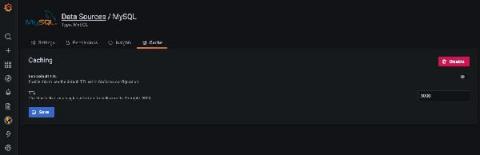

Reduce costs and increase performance with query caching in Grafana Cloud

We are excited to announce the launch of query caching in Grafana Cloud, which can significantly reduce load times and costs of your most popular Grafana dashboards. Now, when the same query is submitted repeatedly, the results will come back from the cache rather than the data source itself. This not only lowers load times for popular dashboards, but will also reduce API costs for your data sources and decrease the likelihood that those APIs will rate-limit or throttle requests.

How To Enable Successful Project Implementation

Do you know how to enable successful project implementation? With the support of the right tools and resources, it’s never been easier to optimize your workflows around efficiency to deliver exceptional results for your customers. StartingPoint can help to solve disconnected workflow experiences to ensure project implementation and delivery is as smooth as possible. According to research from PWC, digital project management software increases performance.

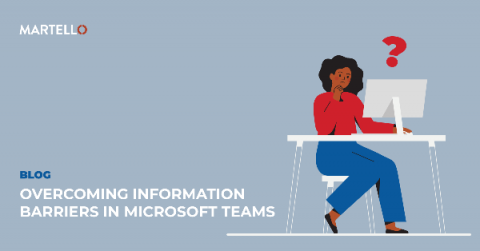
Overcoming Information Barriers in Microsoft Teams

The phrase “Teams is slow” means that somewhere something isn’t working. But who in the organization should lead the charge to address the problem – especially when the problem isn’t Teams? This blog will examine the different information barriers in Microsoft Teams and how to overcome them.

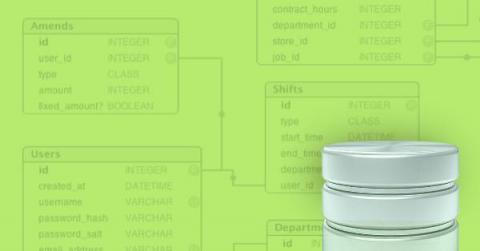
Investigating the Database Family Tree

Investigating your family tree can be an interesting experience. For example, what if you discovered you were related to a famous person who won a Nobel Prize or performed a heroic act? Conversely, what if you realized you had an ancestor who was an infamous criminal? Much like examining your genealogy can be an exciting adventure, looking at the family tree of your database can prove to be just as rewarding. Databases occasionally undergo a phenomenon known as drift.

Incident Review - Akamai Performance Degradation Slows Down Major Websites Worldwide

This summer has seen a series of outages and performance degradations from some of the world’s most widely used CDNs, including the June 8, 2021 Fastly outage (owing to DNS or configuration issues) and an Akamai outage on July 22, 2021 (also likely caused by DNS failure).

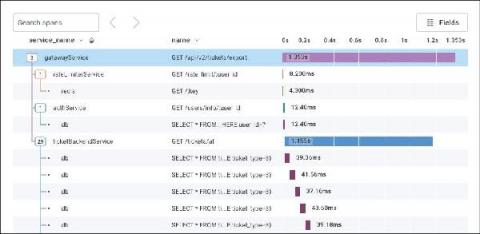
An Introduction to Distributed Tracing

There’s no strict definition of a distributed system. But generally speaking, if you have reached a point where you’re running more than five interdependent services at once, that means you’re running a distributed system. It also means you are more than likely experiencing difficulties when troubleshooting using traditional debugging tools. Unfortunately, pulling up multiple tools, each built for a monolithic world, doesn’t help pinpoint the problem.

Achieving the Army's data imperatives at the tactical edge with Elastic

As the Industrial Age Army transforms to the Information Age Army, Army leadership recognizes the need for adaptable technologies that enable data exchange at the tactical edge. Not only must these technologies be in lock step with the 8 guiding principles of the DoD Data Strategy, but they must also deliver on the Army’s data imperatives of speed, scale and resilience.

Essential Tools for Site Reliability Engineers

Site reliability engineers (SREs) are involved in scaling systems and making them reliable and efficient for organizations. But SREs often fail to build system resiliency when they do not have the right tools at their disposal. In this post, we’ll uncover five leading tools that SREs can use to drive the reliability and stability of computing systems. It also examines how SREs can use the tools to improve operations tasks and infrastructure processes.