Operations | Monitoring | ITSM | DevOps | Cloud

Grafana Tempo 1.1 released: New hedged requests reduce latency by 45%

Grafana Tempo 1.1 has been released, and like our major version suggests, there are no breaking changes. If you’d like, please check out the release notes . But if you find that release notes can sometimes be difficult to decode, fret not! All the highlights are below.

Proactive Microsoft 365 & Microsoft Teams Service Delivery Monitoring for Enterprise IT & MSPs

Providing an effective service – especially in a world with constantly evolving needs – goes beyond standard operating hours. Imagine if a bank only kept your investments secure while they were ‘open’ during their hours of standard operation? Issues can arise at any time and having effective service delivery monitoring and support for enterprise’s IT teams and managed service providers is critical.

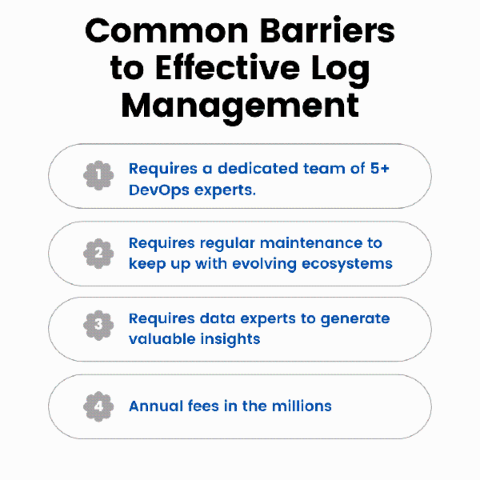
The "Perfect" Log Management Solution Is Invisible

It sounds like a wild claim, considering that billion dollar companies like Splunk, Datadog, New Relic, and Solarwinds are consistently making national headlines, for both good and bad reasons. Observability leaders are anything but invisible, so how can the perfect solution be different? Are they that far off?

Deploying your Gradle Build Cache Node using GCP

This tutorial is a follow-up to TurboCharging your Android Gradle builds using build cache . The key focus of this post is the remote build cache, a build speed acceleration technology that can be implemented for both local and CI builds. This is a technology worth knowing about because: Gradle provides a build cache node available as a Docker image. You can host this image in a number of ways.

How To Begin The Digital Transformation Process In Marketing And Communications

The year 2020 proved that we need to “adapt” to the unknown, the “new normal” and the constant transformation of what would become a new state of living — one that meant being “displaced” and personally disconnected. If the global Covid-19 pandemic taught us a lesson, it was that we could incorporate new ways of living by self-isolating yet maintaining social integration via a digital presence.

Improving Web Page Load Time

HTTP/2 (originally named HTTP/2.0) was a major revision of the HTTP network protocol used by the World Wide Web published in 2015. Indeed, those in the Citrix/EUC ecosystem may remember Marius Sandbu investigating the benefits of HTTP/2 for NetScaler, Microsoft IIS, and Storefront users back in 2015/6. HTTP/2 was the first new version of HTTP since HTTP/1.1, which itself was standardized in RFC 2068 in 1997.

DataOps: keeping the data flowing with Model-driven Operations

If you’ve ever lived DataOps, you’ll know that it’s a challenge at the best of times. A day in the life of a typical data engineering team involves securing, releasing, debugging and stabilising complex and oftentimes fragile data pipelines. These pipelines can involve many source applications and intermediaries, and troubleshooting them under management pressure when it’s all going wrong is stressful.

Migration to Microservice Architecture: A guide

The software design is perhaps the most important aspect that directly influences the ability to scale up, workload performance, the availability of the software, and the longevity of the software itself. It is also important to understand that traditional monolithic designs are still usable and widely used to fulfil many everyday goals. However, now we have a different problem. With the rapid growth of digital services , virtualization services, and an increasing dependency on cloud-based services.