Operations | Monitoring | ITSM | DevOps | Cloud

How the Pandemic Impacted the Government's Cloud Migration Plans

“Cloud-first” has been a government imperative for many years, but the pandemic usurped this strategy, making “cloud-now” a priority. The results have been transformational. The cloud made wide-scale government telework possible, but it’s also given agencies the opportunity to test drive new cloud applications and experience the scalability and security benefits first-hand.


Has the firefighting stopped? The effect of COVID-19 on on-call engineers

With digital becoming the primary channel for work, education, shopping, and entertainment in the last 18 months, it’s no surprise that workloads for technical teams and on-call engineers have increased. Data from PagerDuty’s inaugural platform insights report, The State of Digital Operations, highlights this reality. As of July 2021, the average number of events managed daily by PagerDuty is 37 million, with 61,000 of those being critical incidents.

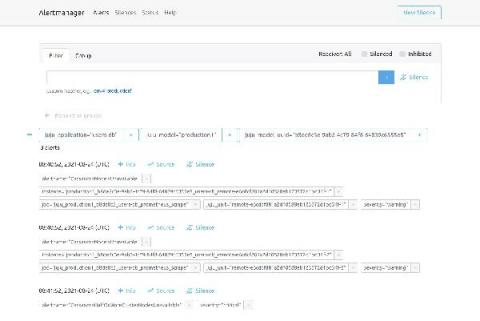
Model-driven observability: Taming alert storms

In the first post of this series, we covered the general idea and benefits of model-driven observability with Juju. In the second post, we dived into the Juju topology and its benefits with respect to entity stability and metrics continuity. In this post, we discuss how the Juju topology enables grouping and management of alerts, helps prevent alert storms, and how that relates with SRE practices.

Cloud PaaS through the lens of open source - opinion

Open source software, as the name suggests, is developed in the open. The software can be freely inspected by anyone, and can be freely patched as required to suit the security requirements of the organisation running it. Any publicly identified security issues are centrally triaged and tracked.

The Impact of Internet of Things (IoT) in the Retail Industry

Internet Of Things has always played a significant role in the retail industry, stocking and warehousing. And its value is projected to rise from USD 14.5 billion in 2020 to USD 35.5 billion by 2025, at a CAGR of 19.6% The term Internet of Things was coined by Kevin Ashton when he was faced with a challenge in logistics and supply chain management while he co-founded the MIT Auto-CAD centre.

ServiceNow partners with Intel, Volteo to provide EaaS, Edge to Service Solutions

Data is at the heart of every business today. But if we don’t understand the data or if the data isn’t accessible, it doesn’t do us much good. More important than the data itself is having the right data in the hands of the right people who can execute at the right time. This need has given rise to edge computing, which helps businesses glean insights from data by processing it as close to the source as possible.

Logging Best Practices: Knowing What to Log

First of all, don’t ask this! Instead of asking what to log, we should start by asking “what questions do we want to answer?” Then, we can determine which data needs to be logged in order to best answer these questions. Once a question comes up, we can answer it using only the data and knowledge that we have on hand. In emergent situations such as an unforeseen system failure, we cannot change the system to log new data to answer questions about the current state of the system.

Deploy ASP.NET Core applications to Azure App Service

The ASP.NET Core framework provides cross-platform support for web development, giving you greater control over how you build and deploy your.NET applications. With the ability to run.NET applications on more platforms, you need to ensure that you have visibility into application performance, regardless of where your applications are hosted. In previous posts, we looked at instrumenting and monitoring a.NET application deployed via Docker and AWS Fargate.

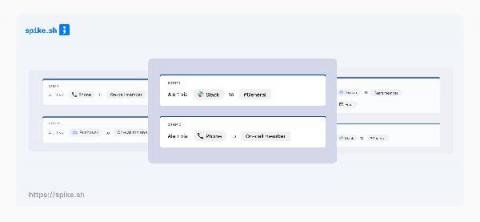
New feature: Templates for Incident Management

At Spike.sh , we are obsessed with making incident management more accessible to dev teams everywhere. With this goal in mind, we are always looking for ways to reduce the friction while setting up the Spike.sh platform. When we saw customers asking our advice for creating effective on-call schedules and escalations, we knew we had to do more than just good documentation - we needed a way to share best practices with our customers in the product itself.