Operations | Monitoring | ITSM | DevOps | Cloud

Coffee Break Webinar Series: "Intelligent Observability - What the Analysts Say"

We know commitment issues are the real deal, especially when it comes to significant and costly tech investments. Understanding how the market is performing and what’s up ahead is critical for investing in AIOps. Our crew is here to help you through the challenging decision-making days and offer up the best analyst guidance.

Managing Updates to the Splunk Cloud Vetting Process

Before apps can be installed in a customer’s Splunk Cloud deployments, these apps have to go through Splunk’s cloud vetting process. Cloud vetting helps ensure that apps are safe and performant for our mutual customers to use in Splunk Cloud. It’s important for us to make regular updates to our cloud vetting requirements in order to ensure apps running on Splunk Cloud are “up to snuff”.

Demystifying the Hype Around XDR

Extended Detection and Response (XDR) has generated a lot of buzz recently with press, analysts, and even customers. There’s no denying that, at face value, its promise of reduced complexity and cost while increasing detection and response is alluring. As security teams look to modernize their security tooling, they’re also looking for solutions to some of their largest challenges. Is XDR the answer? What is XDR, exactly, and how do you determine if it’s right for your organization?

The Top 14 Free and Open Source SIEM Tools For 2021

Security Information and Event Management (SIEM) is a combination of Security Information Management (SIM) and Security Event Management (SEM). A SIEM solution provides real-time analysis of security alerts generated by applications and networks. SIM is the collection, monitoring and analysis of security-related data such as log files into a central repository for trend analysis.

Pragmatic Incident Response: 3 Lessons Learned from Failures

In my past experience as an SRE I’ve learned some valuable lessons about how to respond and learn from incidents. Declare and run retros for the small incidents. It's less stressful, and action items become much more actionable. Decrease the time it takes to analyze an incident. You'll remember more, and will learn more from the incident. Alert on pain felt by people — not computers. The only reason we declare incidents at all is because of the people on the other side of them.

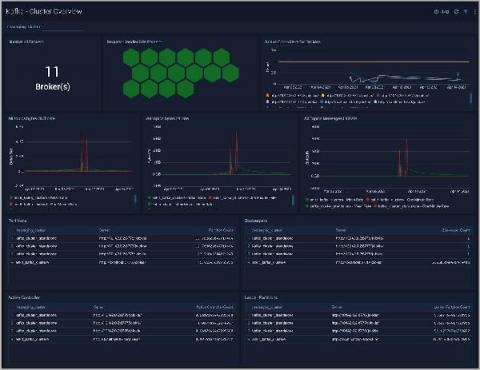
Monitoring Apache Kafka Clusters with Sumo Logic

Apache Kafka® is one of the most popular streaming and messaging platforms, commonly used in a pub-sub (publish-subscribe) model, where consumer software applications send data via messages that producer software applications can consume. Teams use Kafka for a variety of use cases, including monitoring user activity, sending notifications, and concurrently processing streams of incoming data such as financial transactions.

Accelerate Hybrid Threat Protection Using Sumo Logic Cloud SIEM powered by AWS

It has been off to the races for the Sumo Logic and AWS teams since the general availability of the Sumo Logic Cloud SIEM powered by AWS solution on June 1, 2021. We are excited for the overwhelming response from customers from across all segments, industries and geographies.

The Business Case for Switching from the ELK Stack

Last year we published a popular paper on how to calculate the true cost of an Elasticsearch, or ELK (for Elasticsearch, Logstash, Kibana) stack environment. The paper helps readers calculate their overall annual cost of ownership for their ELK environment, and reveals how the cost burden of ELK is much higher than anticipated for most customers. That paper clearly hit a nerve — it’s been, by far, our most downloaded piece of content.

Accountable but Not Informed - Bring Clarity to Your Desktop Virtualization Environments

Why is it that when IT has to manage a virtual desktop environment, their job becomes infinitely harder? If you were to poll every major enterprise IT department, there’s always one team (or person) that’s ultimately held accountable for the organization’s Digital Employee Experience.

Google's Core Web Vitals: LCP, FID & CLS explained

You may or may not have heard of Google Core Web Vitals, but the importance of getting them right for your website is like Everest for website owners right now. So what are the Core Web Vitals and what should you do to make sure my website meets them? Google Core Web Vitals consist of 3 components that relate to page responsiveness, speed, stability, and how they affect the user experience. Already scrambling to Google what these mean? Don’t worry, all 3 will be explained in detail below.