Operations | Monitoring | ITSM | DevOps | Cloud

Resilience, DevSecOps, and other key takeaways from RSAC 2021

For the first time in its 30-year history, the 2021 RSA Conference was a virtual-only event, and not in its usual time during the spring. But, with 20,000 registrants joining for the various sessions, it was a testament to this year’s conference theme of resilience.
A Comprehensive Cloud Migration Checklist

More and more cloud providers are emerging and spreading their business across different regions in the current times. As a result, customers want to reduce their IT workload and migrate their product or application to a cloud-based environment. The primary reason behind this is that the cloud heavily reduces the overheads of investing in IT infrastructure, hardware upgrades, maintenance, etc.

Upcoming trends in DevOps and SRE

DevOps and SRE are domains with rapid growth and frequent innovations. With this blog you can explore the latest trends in DevOps, SRE and stay ahead of the curve. The past decade has seen widespread adoption of DevOps methodologies in software development. Unsurprisingly, as the needs of users change, DevOps techniques have evolved as well. In this blog we will look at the trends that are most likely to have a significant impact in the coming years.

Observability with Zero Code Instrumentation? Meet eBPF

Current observability practice is largely based on manual instrumentation, which requires adding code in relevant points in the user’s business logic code to generate telemetry data. This can become quite burdensome and create a barrier to entry for many wishing to implement observability in their environment. This is especially true in Kubernetes environments and microservices architecture.

How Traffic Engineering Can Lead to a Smooth Transition to 5G

Communications Service Providers around the world have experienced an unprecedented explosion in demand for bandwidth due to several driving forces including more video streaming, the growing popularity in areas like cloud gaming and the increasing move to the cloud to name a few.

Root out the odd operation with Operations Breakdown

Transactions are sent when your service receives a request and sends a response, like an API call or a page load. Within each transaction is a series of operations. We built Operations Breakdown to help you, the developer, quickly see how much time was spent in each operation within a transaction. Why? Simple, so you can address the operations with the longest duration and likely causing annoying performance issues for your customer.

Create alerts from your logs, available now in Preview

Being alerted to an issue with your application before your customers experience undue interruption is a goal of every development and operations team. While methods for identifying problems exist in many forms, including uptime checks and application tracing, alerts on logs is a prominent method for issue detection. Previously, Cloud Logging only supported alerts on error logs and log-based metrics, but that was not robust enough for most application teams.

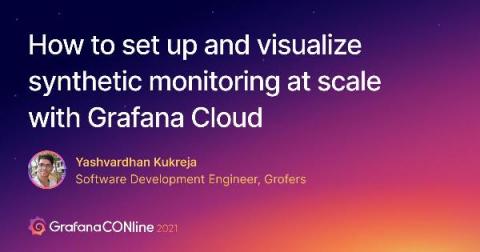
How to set up synthetic monitoring at scale with Grafana Cloud

While unit testing and integration testing can give you insight into the individual functionalities of an application, “at times you need some sort of monitoring or testing mechanism which also simulates a user’s behavior to test how the application would work or look to an actual user in the world,” says Grofers Software Development Engineer Yashvardhan Kukreja. That’s where synthetic monitoring comes in.