Operations | Monitoring | ITSM | DevOps | Cloud

ManageEngine recognized in 2021 Gartner Magic Quadrant for Security Information and Event Management for the fifth time!

Today, we’re excited to announce that ManageEngine has been recognized in 2021 Gartner Magic Quadrant for security information and event management (SIEM) for the fifth consecutive time. We are thrilled to be awarded this recognition yet again for our contribution to the world of cybersecurity. “Most enterprises were not prepared for the widespread changes in work environments following the COVID-19 pandemic.


How and Why Has Cloud Computing Surged During the Last Few Years?

Cloud computing is undergoing a surge in adoption. In 2020, more money was spent on cloud computing than on-site data centers - a huge milestone. Increasingly, computing and storage are being routed off-site. How and why is this transition taking place? This article takes a quick look at some of the factors driving this watershed moment.

Managing reusable pipeline configuration with object parameters

CircleCI pipelines are defined in configuration files using the YAML syntax, which has been widely adopted by many software tools and solutions. YAML is a human-readable declarative data structure commonly used in configuration files and in applications where data is being stored or transmitted. The data in pipeline configuration files specifies and controls how workflows and jobs are executed when triggered on the platform.

Intro to AIOps: Leveraging AI and Machine Learning in DevOps

AIOps is a DevOps strategy that brings the power of machine learning to bear on observability and system management. It’s not surprising that an increasing number of companies are now adopting this approach. AIOps first came onto the scene in 2015 (coincidentally the same year as Coralogix) and has been gaining momentum for the past half-decade. In this post, we’ll talk about what AIOps is, and why a business might want to use it for their log analytics.

Kubernetes in 2021: Where does the industry go next?

Ever since Google made Kubernetes open-source in 2014, it has enjoyed incredible growth, helping businesses of all sizes to successfully manage their containers and ultimately make the most of all that our cloud native world has to offer. Individual users certainly initially led the charge with Kubernetes, identifying issues, and generally exploring the best ways to intelligently test, manage, and deploy workloads.

DORA Metrics Explained: the four DORA metrics and how to improve them

DORA metrics come from an organization called DevOps Research and Assessment. This was a team put together by Google to survey thousands of development teams across multiple industries, to try to understand what makes a high performing team different than a low performing team. What they ended up settling on are these four metrics.

Civo reviewed by respected Kubernetes guru Viktor Farcic

A couple of days ago, I was pleasantly surprised to suddenly see a tweet come in from Viktor Farcic. Viktor now works at upbound.io who developed Crossplane, and he also runs his own popular YouTube channel and co-hosts DevOps Paradox podcast. He’s well respected in the cloud native community. When I saw the tweet and noticed that Viktor had recorded a review of Civo on YouTube, I was just hoping he was kind to us...and I am pleased to say he was!

Monitoring and Improving Employee Experience In Virtual Desktop (DaaS/VDI) Environments (Part 2)

In our last blog post on monitoring employee experience, we discussed the challenges most organizations face when trying to ensure optimal end user experience in Daas/VDI environments. We also discussed how the Catchpoint platform is uniquely positioned to help our customers monitor employee experience efficiently - In the second part of the series, we discuss a real customer use case.

Testing strategies for Step Functions

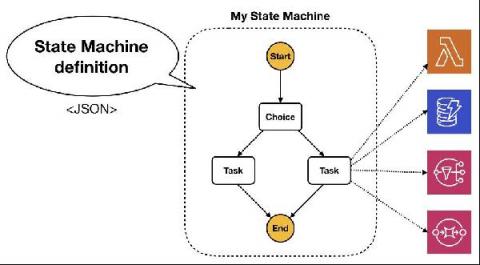
AWS Step Functions is a powerful orchestration service that lets you model even the most complex business workflows. It packs a great visualization tool (which you can also use to design your workflows visually now!) and can integrate with many AWS services directly, including Lambda, DynamoDB, and API Gateway. It’s one of my favorite AWS services and I often use it to model complex or business-critical workflows.