In the Information Age, data is currency. Controlling the flow of information and more importantly, protecting it has increasingly become a focal point for companies who want to remain competitive in modern markets. Improving data efficiency, integrity, and security is often how companies separate themselves from their peers. We present two of the most common methods for data transfers: FTP and SFTP.
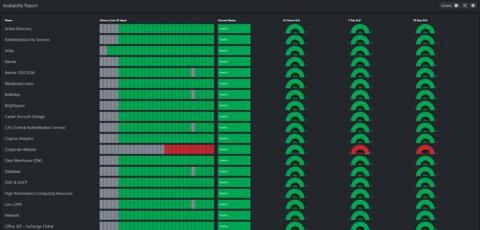
Sometimes an organization gets bogged down with the details. It happens. You have all of this fantastic data in SCOM, and you’re trying to share it, but your users don’t care. That’s not true. They care, but what they don’t care about is the server. To put it another way, they care if the service or application they depend on is working. But here’s the catch, you can’t do this in SCOM.
At times, directing projects in multiple locales from a desktop or laptop feels like conducting an orchestra in the dark. Coordinating with diverse, remote teams of developers producing software on an agile schedule of continual updates and releases can be especially nerve-wracking. At Sleuth, we’re crushing the remote-work challenge because, in 20 years of managing from afar, we’ve learned a thing or two — actually three — about how to do it right.
Our reliance on digital services continues to be heightened by the ongoing COVID-19 pandemic. For work, school, and play, digital remains the primary channel. This puts huge pressure on ITOps and DevOps teams, making it critical that they can collaborate easily to resolve incidents rapidly. Many modern ITOps and DevOps teams rely on one of PagerDuty’s key integration partners, Slack, to meet this need.
Ever since the 1980s, network monitoring systems have been in place for companies that rely on computer networks to perform their daily operations. Since their implementation, they’ve undergone drastic changes and now, provide IT teams with incredible tools to ensure best practices for everything from servers to application performance.
Share When it comes to serverless applications, their distributed nature of exponential scalability and use of potentially thousands of resources automatically begs the need for observability. Using the mass data output of an application to understand and optimize the internal states is a game-changing strategy, but only if used well. Dashbird Atlas takes serverless observability to a new level, reducing excessive noise through simple visualization of your application.