Operations | Monitoring | ITSM | DevOps | Cloud

Kubernetes CronJob: Complete Guide to CronJobs

Kubernetes CronJobs are a feature that lets you automate tasks in a Kubernetes cluster. They let you schedule and run jobs on a regular basis, making them good for tasks like data backups, database maintenance, log rotation, and more. CronJobs help make operations easier and reduce manual work, letting you focus on other important parts of your application. In this guide, we will explain what CronJobs are and how they are different from regular Kubernetes Jobs.

NodeJS Instrumentation with the Lumigo OTLP endpoint

As software systems become more complex, navigating their inner workings has become increasingly difficult due to the evolution of more advanced architectures. While distributed systems, such as microservices and cloud-native architectures, offer benefits in scalability and agility, they also make it more challenging to pinpoint and resolve system issues. Traditional methods for tracking errors are often insufficient in these multifaceted environments.

How Azure cost anomaly detection shields billing shocks

One of the fundamental promises of the cloud, when organizations embrace it, is significant cost savings compared to its on-premises costs. However, organizations to realize savings is required to proactively plan and monitor the application’s cost at a granular level. Azure cost anomaly detection involves promptly identifying, rectifying, and analysing unexpected Azure cost events to minimize their impact on the business.

Why Cloud Migrations and Repatriations are so Important and How to Get Them Right

Cloud computing has transformed the landscape of IT and business over the past several years, offering unparalleled speed, scalability, flexibility, and cost-efficiency to organizations of all sizes. However, amidst the widespread adoption of cloud technologies, there's a noteworthy phenomenon that's also gaining attention and traction: cloud migrations and repatriations.

Feature Friday #1: ifelse()

Looking for a way to concisely set a variable conditionally? Have you heard of ifelse()? In CFEngine, traditionally class expressions are used to constrain promises to different contexts. Setting a variable to different values based on context might look like this: /tmp/feature-friday-1.cf command output That’s great, lots of flexibility, but with an increasing number of options the policy can get quite long and it’s easier for a human interpreter to lose track of the context.

5 Top Network Scanning Tools in 2024

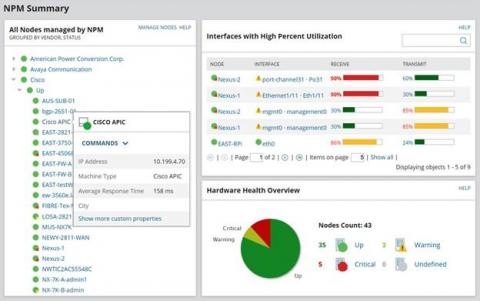
Network device scanning effectively ensures connected devices and applications to your network perform as per the expected standards without any vulnerabilities. Regular network scanning allows you to gather data from the connected devices and applications to check their uptime and performance. It can also allow you to safeguard your network devices and applications from cyberattacks.
Sponsored Post

CloudFabrix at Cisco Live EMEA - Highlights

Cisco’s one-of-a-kind conference, Cisco Live EMEA 2024 in Amsterdam, marked a pivotal milestone in illuminating the path forward with a spotlight on AI, operational simplicity, and security. Bringing key network telemetry and correlating it with the business outcomes has become quite essential for Modern Enterprises and CloudFabrix addressed this by launching three new modules for the Cisco Observability Platform.

ROI Demystified: A Deep Dive into What ROI Truly Means for Your Business

The term ROI (Return on Investment) often gets thrown around without a thorough understanding of its implications. Many see it merely as a financial metric, but in reality, ROI encompasses much more than monetary gains. In this comprehensive exploration, we delve into the true essence of ROI, its multifaceted nature, and how it impacts every aspect of your business strategy.