Operations | Monitoring | ITSM | DevOps | Cloud

Our uptime check can now verify response headers

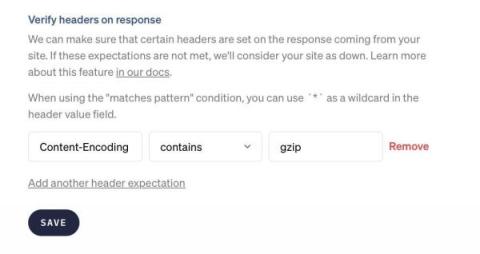
When we make a request to your site to verify that your site is up, the response of your server will contain certain headers. We can verify that those headers contain the values you expect. If these expectations are not met, we'll consider your site as down. In the "Responses" section of the uptime settings page, you can specify which headers we should verify. You could add this expectation to ensure your page uses gzip compression.


How to Optimize Your Website for Video

Video content has taken the Internet by storm in recent years. Capturing large volumes of information quickly and engagingly makes videos popular among consumers who often prefer them over text-only media such as blog posts. One survey shows how adding videos into landing pages could boost conversion rates up to 80% while increasing visitor time on your website and potentially opening avenues for sales opportunities.

Inbound Marketing Strategies: Attract, Engage, and Delight Customers

Introducing Inbound Marketing Strategies: a comprehensive approach to attracting, engaging, and delighting customers. With an inbound strategy, your business will be able to build relationships with potential customers and nurture them through the buyer's journey. By leveraging content marketing, search engine optimization (SEO), social media promotion, and email marketing, you can effectively attract leads that are already looking for what you have to offer.

Top 10 Security Tips for a New Real Estate Website

As the real estate industry embraces digitalisation, establishing a secure online presence has become essential for real estate websites. Protecting sensitive data, ensuring user privacy, and maintaining a trusted online reputation are crucial for the success of your real estate website. This article discusses the top 10 security tips for safeguarding your new real estate website.

Tips to Avoid Cold Email Marketing Mistakes and Secure More Deals

Cold email marketing, when done right, can be a powerful tool to generate leads, build relationships, and drive conversions. It allows you to reach out to individuals who may have never heard of your brand before, capturing their attention and compelling them to take action. However, many businesses fall into the trap of making common mistakes that result in poor response rates, wasted efforts, and a tarnished brand image.

Patch management automation: Is it worth the hype?

Patch management is a term that’s familiar to all within the depths and boundaries of endpoint security. While the addition of “automation” to this term might make it seem like one among the thousands of other automated tasks, cybersecurity experts have been going gung ho over it in the last few years. If you’re reading this, it probably doesn’t make sense to explain to you what patch management automation or automated patch management is.

The Buzz for CloudFabrix at Cisco Live

In line with its platform strategy, Cisco launched a vendor-agnostic full-stack observability platform built on OpenTelemetry at its signature North American partner and customer event in Las Vegas, the Cisco Live 2023. With nearly 20,000 attendees, the show was full to the brim with product, strategy and partner announcements. Scroll to the end of the article to learn more about Cisco Full Stack Observability (FSO) and how CloudFabrix is helping bring Cisco’s vision to life.
Sponsored Post

Logs vs. Events: Exploring the Differences in Application Telemetry Data

What is the difference between logs and events in observability? These two telemetry data types are used for different purposes when it comes to exploring your applications and how your users interact with them. Simply put, logs can be used for troubleshooting and root cause analysis, while events can be used to gain deeper application insights via product analytics. Let's review some application telemetry data definitions for context, then dive into the key differences between logs and events and their use cases. Knowing more about these telemetry data types can help you more effectively use them in your observability strategy.

Graphite Metrics Delay: Why it Happens and What to Do

To understand why Graphite metrics delay occurs, we must first know what Graphite is. Graphite is an open-source tool used to track the performance of websites, applications, and network servers. It makes it simple to monitor, store, retrieve, and visualize numeric time-series data. While Graphite does make it easier to render graphs on-demand, the struggle of dealing with large amounts of data with minimum delay is real.

The Rebirth of InfluxQL in 3.0: A Quick Start Guide to Configuration and Usage

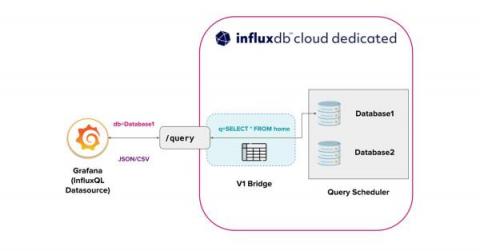
If we turn the clocks back to September 2013, we released InfluxQL alongside InfluxDB. InfluxQL is a SQL-like query language, specifically designed to query time series data. For many of our users, InfluxQL still remains the primary way they interact with InfluxDB. Based on this feedback, InfluxQL has been reborn in InfluxDB 3.0 alongside native support for the SQL query language. So what do I mean by reborn?