Over the past few weeks, Splunk has created a number of different tools to help bring data to the COVID-19 crisis. These tools, such as a public dashboard, an app on Github, and a Mobile Dashboard can be used to identify locations of outbreaks, find correlations and more.
One of the central questions we ponder in our work is: what does uptime mean in an interconnected world? You can do everything to ensure 100% reliability, yet still fail. How is this possible in an interconnected world? Shouldn’t there be enough redundancy to ensure nothing breaks if you don’t actively break it? That’s another way of saying technology is great when it works.
Doesn’t it sound magical to predict issues? Detecting a network outage, long before it happens. Yes! It does sound exciting. Now there are numerous network monitoring softwares out there offering this capability. To accomplish this particular goal, businesses around the world have been investing in AI powered network monitoring softwares.
Every application creates logs. Web servers, firewalls, services on your Kubernetes clusters, public cloud services, and more. For companies, being able to collect and analyze these logs is crucial. And the growing popularity of microservices, IoT, cybersecurity, and cloud has brought an explosion of new types of log data. That’s why log management is a huge $2-billion-plus market that’s growing 14% YoY.
In this guide, we’ll cover how you can use Morgan npm to log requests and other aspects of your web application built on Express (or any of the similarly architected frameworks around). So what can Morgan do for you? And when would you need it? As you’ll see in a second if you’re working with Express or a similar framework (such as restify) you’ll have the need to log incoming information about the requests, this framework was designed specifically for that, just keep reading.
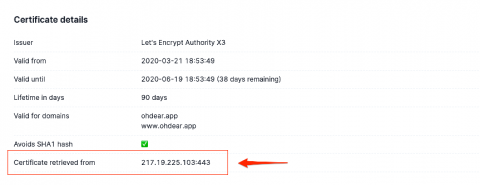
As part of our service, we perform SSL certificate monitoring. We do this slightly different than other providers, which is why were able to detect a problem with the SSL certificates of a large, commercial, CDN provider. In this post, we'll do a technical deep-dive into how we found this problem!
Kubernetes is hugely popular and growing, and is primarily used on the cloud — 83 percent of organizations included in a large CNCF survey said they run Kubernetes on at least one public cloud. Amazon is a natural option for Kubernetes clusters, due to its mature and robust infrastructure, and a variety of deployment options with a varying degree of automation.
Over the past few months, we’ve been steadily upgrading Instrumental’s alert management features! We’ve improved the overall user interface to make working with alerts faster and easier and added new features.
As many Oracle customers plan their migration to Oracle Cloud Infrastructure or OCI, proper tools should be considered in order to make a smooth transition. We’re excited to share that Enterprise Modules, a key contributor to the Puppet ecosystem, has recently created a module that extends the Puppet language to contain types needed to create and manage the lifecycle of objects within your Oracle Cloud Infrastructure.