Operations | Monitoring | ITSM | DevOps | Cloud

Why I'm Grateful For Our Observability Community

It’s that season, when we take time to consider what we’re grateful for and extend thanks to those we value and the experiences we treasure. One special aspect of America’s Thanksgiving holiday is the inclusiveness of celebrating across all communities and simply sharing, taking time to enjoy the fruits of the land. Giving thanks in late November can bring some fulfillment, but it should also be a reminder that we need to practice gratitude more regularly.


KubeCon 2019 Ushers in New Era for Container Adoption and Maturity

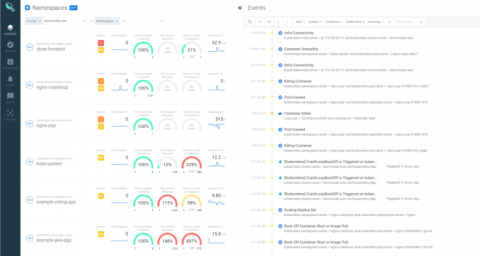
Last week’s container event of the year, KubeCon, hosted by the Cloud Native Computing Foundation, attracted more than 12,000 attendees to the San Diego convention center. While there, I attended numerous sessions but I also spent a good portion of time chatting with DevOps professionals, Kubernetes practitioners, and vendors to understand the practicalities behind deploying and managing containerized workloads and microservices.

19 mobile apps that help you to manage your WordPress site

A flourishing website is a result of lots of hard work, constant management and thorough maintenance. If you are a one-man army or a small business, then managing all this plus your core task without help can seem like a tedious task. Instead of making it a job to sit at your desk and constantly monitor the progress, there are a lot of mobile apps that come to your aid, specifically with WordPress management and maintenance.

[KubeCon Recap] How to Debug Live Applications in Kubernetes

Joe Elliott, a backend engineer at Grafana Labs, took the stage in front of a packed house at KubeCon + CloudNativeCon in San Diego to demonstrate a few of the tricks he uses to debug applications live in Kubernetes. The goal is to increase your knowledge of applications in the production environment. Elliott’s techniques are framework agnostic and Linux-specific, and they are most useful in situations where you have a known type of problem and application.

Why businesses need to suit up against cyberattacks in 2020

Cyberattacks are never going away; in fact, things appear to be getting worse. The complexity of attacks has escalated, resulting in more sophisticated, targeted takedowns. Just look at the attacks in Baltimore, Atlanta, Florida, and Spain within the past few years. Organizations around the world have had their operations halted by ransomware, with some taking weeks to get back to normal.

Inline Image Scanning for AWS CodePipeline and AWS CodeBuild

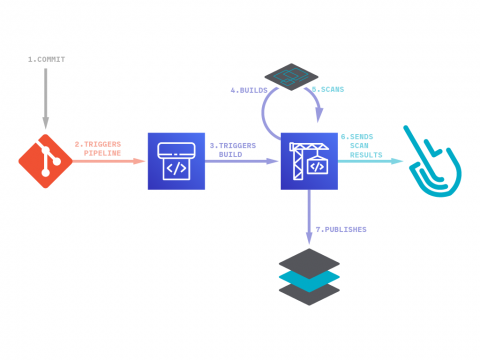
In this blog post you’ll learn how to set up image vulnerability scanning for AWS CodePipeline and AWS CodeBuild using Sysdig Secure DevOps Platform. AWS provides several tools for DevOps teams: CodeCommit for version control, CodeBuild for building and testing code, and CodeDeploy for automatic code deployment. The block on top of all these tools is CodePipeline that allows them to visualize and automate these different stages.

Sysdig extends security across all AWS container services

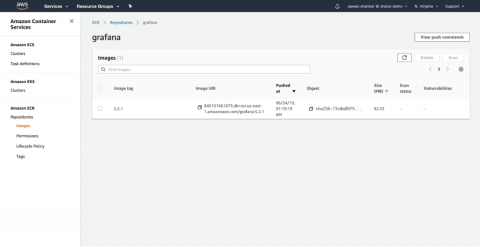
Cloud teams are increasingly adopting AWS container services to deliver applications faster at scale. Along with the roll out of cloud native architectures with containers and orchestration, what’s needed to stay on top of the security, performance and health of applications and infrastructure has shifted. At Sysdig, we’ve worked with Amazon to provide tools and integrations that help secure your Cloud Native workloads deployed across all AWS container services.

Building an agile team's 'safety harness' with cmocka and FOSS

Netdata is made up from agile teams who are deeply committed to improving the usability of our product. We want to respond to our users and introduce in-demand features. Working directly with our community is the best way to make Netdata better. But we face the same the dilemma as all agile teams: How do we do this safely?

Safety first: the best backup applications

Surely you know what a backup is, right? It is what we could also call a “safety copy“. Free backups are precisely that, softwares through which you can create backup copies of your data, to save them on drives such as external hard drives, flash drives, network devices and others. What are they for? Simply put, to restore the original information that you had, of course, after having lost it by accident in some misfortune or careless incident.