Operations | Monitoring | ITSM | DevOps | Cloud

Five Tips for Managing Your International Business

Running an international business presents both exciting opportunities and complex challenges. You have time zones to navigate and currency fluctuations to consider, and the global stage requires so much more planning than ever before. There are some essential tips that you will need for managing your international business successfully, and we've put some of those tips for you below.

The Personalization Paradox: When Tailored UX Turns "Creepy"

“Stop watching me.” That’s an actual message a user typed into a search bar, captured during session monitoring. They weren’t talking to customer support. They were talking to the algorithm. It sounds absurd until you realize how common this is. When users believe a human is behind your personalization system, attributing consciousness to your automated algorithms, everything changes. Their behavior becomes erratic. Your conversions tank. And nobody talks about it.

You can now choose the frequency of checks

As part of our big deploy that added ping and TCP monitoring, we’ve also shipped a small, but often requested feature: you can now choose the frequency of the check we run. By default, we check your website for uptime every minute. The Lighthouse check runs daily. Using our new feature, you can now, for instance, choose that the uptime check should run every 2 minutes, and the Lighthouse check every 5 days. You can choose the frequency at the settings of the check.

Fixing the Reconciliation Gap: Why Order to Cash Breaks Across Industries and How to Close It

Whether you sell consumer goods, ship freight, manufacture vehicles, process payments, underwrite insurance, or manage hospital claims, your business depends on the same thing: order to cash. Orders are created, fulfilled, invoiced, and paid. In principle, it should be simple. In practice, the process is riddled with breaks. Most companies believe they are covered. They run ERP systems like SAP. They use EDI gateways such as Sterling.

Simulating Multi-Agent Workflows to Find Hidden API Vulnerabilities

API gateways are often viewed as the centralized entry point for client HTTP requests in a distributed system. They act as intermediaries between clients and backend services, managing API request routing, load balancing, rate limiting, access control, and traffic shaping across multiple backend services. This API management is vital for many services and products, but many organizations can put too much stock in it.

Help Desk vs. Service Desk: What's the Difference?

Modern businesses depend on strong IT support to keep everything running smoothly. However, many still confuse the terms Help Desk vs Service Desk, often using them interchangeably. This mix-up can lead to choosing the wrong support structure, affecting productivity and user satisfaction. This blog will clearly explain the difference between a help desk and a service desk, and guide you on when to use each.

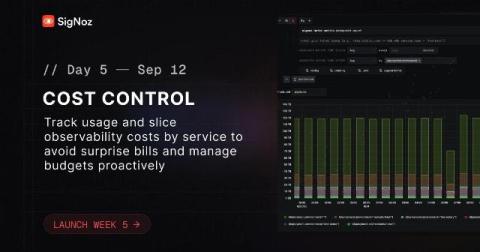
Introducing Cost Meter - Proactive Observability Cost Control with Per-Hour Granularity

The irony isn't lost on us - observability platforms are built to be proactive about system health, yet when it comes to managing observability costs themselves, teams are forced to be reactive. Today, that changes with Cost Meter, now live in our platform. Cost Meter transforms observability spend management from a monthly billing surprise into a proactive, data-driven process with hourly aggregated metrics that give you complete visibility into your telemetry ingestion patterns.

Agentic AI in Customer Support: Is It Ready to Resolve 80% of Issues Autonomously?

Daniel O’Sullivan, Senior Director Analyst at Gartner Customer Service & Support Practice, recently said in an article “Agentic AI has emerged as a game-changer for customer service, paving the way for autonomous and low-effort customer experiences.

What is Service Catalog Observability and How Does It Work?

A service catalog gives teams a shared view of their systems—what services exist, who owns them, how dependencies are structured, and the SLAs that guide expectations. It’s an important part of development infrastructure because it helps everyone speak the same language about services. Service catalog observability builds on that foundation.