Operations | Monitoring | ITSM | DevOps | Cloud

What Is Helium Used For? Key Applications and Concentration Monitoring

Most people encounter helium in party balloons, yet balloons account for only a small share of its use. The bulk of this gas goes into medicine, microelectronics, science, aerospace and welding. For many of these tasks, helium has no equivalent substitute, because no other gas offers the same combination of properties.

How Automation Technology Is Helping Laboratories Scale Their Operations

Laboratories face a familiar scaling problem. Demand rises steadily, the work itself does not change, and the only obvious way to process more of it is to add people and hours. That approach has a ceiling. Sample numbers tend to grow faster than headcount, and the work absorbing those extra hours rarely requires a trained scientist. Each additional operator also introduces their own technique, which becomes a variable in its own right.

Security KPI Dashboards for SAP Operations Teams

An Avantra SAP security dashboard gives SAP operations teams one view of SAP security KPIs, covering SAP Notes and HotNews status, system hardening, user access risk, and audit compliance across on-premises, hyperscaler, and RISE with SAP systems. Security teams have their own tools: a SIEM, a SOC console, vulnerability scanners. SAP operations teams usually don’t.
Sponsored Post

From Zero to Managed in Record Time

If you've spent any time in the SAP ecosystem, you know the "Configuration Tax." It's that invisible, compounding fee paid in hours, manual effort, and caffeine. SAP teams pay tax every time new systems or integrations are brought under observability and management. For years, the industry accepted that observability required a heavy initial lift. Changes in monitoring policy or underlying infrastructure triggered additional effort often parallel and size and scope to initial onboarding.
Sponsored Post

Collective IQ Business: meet the artificial intelligence that transforms IT management

The employee digital experience (DEX) is no longer just a concept; it has become a concrete discipline supported by specialized tools. At the center of this transformation is Collective IQ, Almaden's DEX solution, available in the Essential and Business editions. The Business edition includes AlmaAI a family of generative AI capabilities that take IT management to a new level. These capabilities allow IT administrators to simplify their analysis and faultdetection processes, providing everything from daily prioritization to predictive analytics and naturallanguage interaction.

Models Are Getting Really Good At Git

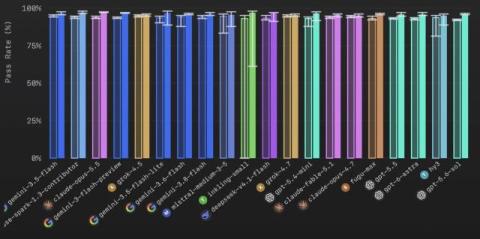
I built GitBench because I was curious about how well models did git things. It turns out that it was a good idea because some models will surprise you. Some of the frontier models were remarkably bad and some cheap open models punched above their weight class. But, as they say, “the times they are a changin’”. Before I go too deep into the latest results, you may want to read up on GitBench and what it is and why I built it in the previous blog post.

EU AI Act 2026: delay, new deadlines & article 73 reporting

On July 27, 2026, the Digital Omnibus on AI, Regulation (EU) 2026/1744, entered into force and rewrote the EU AI Act's timeline. The high-risk obligations that were due to apply on August 2, 2026, including Article 73 serious-incident reporting, now apply from December 2, 2027 for standalone high-risk systems (Annex III) and August 2, 2028 for AI embedded in regulated products (Annex I). Not everything moved.