Operations | Monitoring | ITSM | DevOps | Cloud

Router Monitoring with Grafana

Routers are essential for connecting devices. Routers decide where the internet goes and how fast it should be. Because they play such a crucial role, it's vital to keep an eye on them and make sure they're doing their job well. This act of keeping an eye on routers is what we call "router monitoring." Monitoring routers isn't just about checking how the routers are doing; it's about making sure the whole network works well.
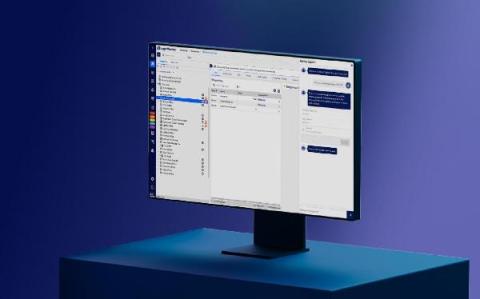

LM Co-Pilot: Your AI Co-Pilot for the Magical Streamlining of IT and Cloud Operations

LogicMonitor’s Generative Intelligence Solution for IT Teams Cutting-edge generative technologies have revolutionized our industry, paving the way for fresh and innovative approaches to deliver interactive and actionable experiences. At LogicMonitor, we firmly believe in leveraging these generative techniques across our platform, offering a uniquely dynamic support system for various aspects of our end-user experience.

Why Implementing App Security Can Lead To Spiraling Costs

Robust app security is non-negotiable, but the spiraling costs that can come with it are. In the context of application delivery, security plays a pivotal role in maintaining business continuity, protecting sensitive data, and upholding a solid reputation. However, the journey to build a formidable defense at the load balancing and reverse proxy layer can quickly become costly with a few wrong turns. Security is important, but buyers don’t have to break the bank to implement it.

What is SLA? How to Handle SLA Breaches?

Service Level Agreements (SLAs) are foundational contracts that define the expectations and commitments between service providers and their customers. These agreements outline the quality, performance, and availability of services, setting the stage for a harmonious relationship. However, as service environments grow increasingly complex, the risk of SLA breaches looms ever larger.

PX5 Announces Tracealyzer Support for PX5 RTOS

A little more than a month ago, we released the free Tracealyzer SDK – a toolkit that allows other embedded software vendors to integrate Tracealyzer recording in their own software. At that time, the development team at PX5 in California were already hard at work combining Tracealyzer with their PX5 RTOS, and yesterday they released the integration. Built with Percepio’s SDK, in a just a few weeks.

Building Dashboard and Dashboard Inputs in Cribl Search

This blog demonstrates how to create “inputs” to Cribl Search dashboards. An Input is a control widget that we can add to our Dashboards to control how they execute. They allow the user to supply a range of inputs to customize one or many of the Searches in each of the panels on a given dashboard. Currently, there are four types of inputs: a time picker, a dropdown, a string, and a number. This blog shows how to create all four types of Inputs on a dashboard using built-in sample data.

A Single Pane of Glass: How It Transforms IT Asset Monitoring

How large is your company’s IT infrastructure? How many devices and assets are attached to it? As large as it was yesterday, it’s probably larger today — and will be still larger tomorrow. This is compelling organizations to embrace device and asset monitoring under a “single pane of glass,” meaning via a unified, “single console” view of their entire network to enable unified endpoint management (UEM).