Operations | Monitoring | ITSM | DevOps | Cloud

A Comprehensive Comparison of Prometheus and Nagios

Prometheus and Nagios are both open-source infrastructure monitoring solutions created by SoundCloud Engineers and Ethan Galstad respectively. They both find popular usage in monitoring the availability and performance of computer systems, networks, and applications. While Prometheus uses a pull-based model to collect metrics and its dynamic service discovery support, Nagios uses a push-based model modeled on plugins.


Grafana vs Graphite: A Comparison for Data Visualization and Analysis

Data generation today is at an unprecedented level, and we are generating an inexhaustible amount of data. As a matter of fact, more data has been created over the past two years than ever before in the history of mankind. This throws a big complexity in front of us. How do we even manage such a huge amount of data? Where do we store them? Can they be segregated to fit into our needs, who would do that for us, and so on! The questions are endless, and so is the rate of generation of new data.

How an Observability Pipeline Can Help With Cloud Migration

Do you want to confidently move workloads to the cloud without dropping or losing data? Of course, everyone does. But easier said than done. Cloud migration is tricky. There’s so much to think through and so much to worry about — how can you reconfigure architectures and data flows to ensure parity and visibility? How do you know the data in transit is safe and secure? How can you get your job done without getting in trouble with procurement?

Unlocking the Power of Embedded CDNs: A Comprehensive Guide to Deployment Scenarios and Optimal Use Cases

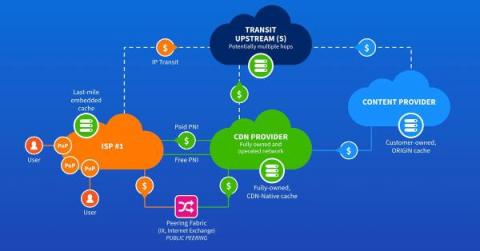
This guide explores the benefits of embedded caching for ISPs and discusses deployment optimization strategies and future trends in CDN technology. Embedded CDNs help reduce network congestion, save costs, and improve user experiences. ISPs must carefully plan their deployment strategies by considering how each of the CDNs distributes content and directs end-users to the caches. They need to know both the CDNs and their network architecture in detail to build a successful solution.

Feedback Week Results

For the third time, we initiated the Icinga Feedback Week. Why? Because your opinion matters to us, a lot. Even though, we do get feedback throughout the year, our yearly Feedback Week is a chance for us, to ask you specific questions to certain topics. By understanding your thoughts and feelings towards Icinga, we aim to develop the most effective monitoring tool for you. But that wasn’t all: as a good tradition, we asked you to choose your Community Heroes and we have found five!

Demystifying Container Orchestration: A Beginner's Guide

As organizations increasingly adopt containerized applications, it is essential to understand what container orchestration is. This guide delves into what container orchestration is, its benefits, and how it works, comparing popular platforms like Kubernetes and Docker. We will also discuss multi-cloud container orchestration and the role of Rancher Prime in simplifying container orchestration management.

How to Protect Your Storage Account Against Blob-Hunting

Blob storage is a cloud-based service offered by various cloud providers, designed to store vast amounts of unstructured data such as images, videos, documents, and other types of files. It is highly scalable, cost-effective, and durable, making it an ideal choice for organizations that need to store and manage large data sets for applications like websites, mobile apps, and data analytics.

Honeycomb's Deployment Protection Rule for GitHub Actions

Today, GitHub announced the public beta of Deployment Protection Rules for GitHub Actions for GitHub Enterprise users. In support of that launch, we’ve partnered with GitHub to create the Honeycomb Deployment Protection Rule (available as a GitHub App). This rule lets you run Honeycomb queries so that you can get real-time performance feedback from your services before deciding whether to prevent deployment of your code to a specific environment.