Operations | Monitoring | ITSM | DevOps | Cloud

Walking the Talk: How MDMs Help Recycling Businesses Stay True to Their Values

The call for digital transformation is largely directed toward for-profit companies: Digitizing their operations is presented as a means of increasing their efficiency, productivity, and ultimately, revenue. But organizations focused on social impact should care as much about digital enablement as their for-profit counterparts.

The TIG Stack in IIoT/OT

Many industrial operators find themselves amid yet another industrial revolution. Deeper insight through artificial intelligence (AI) and machine learning (ML) integrations characterize this fourth wave (or Industry 4.0). Data is no longer just a record occupying server space. It’s alive and providing value. Real-time insights work in tandem with historical records, painting a complete picture of the lifespan of a piece of machinery and/or its components.

What You Need to Know About IT Automation (and Common IT Tasks to Automate)

Picture this: your organization has grown exponentially in the past couple of years and the IT team is having a hard time keeping up the rapid growth. You were able to get hiring approved but there is still so much work that your team is having to work overtime just to stay afloat. Plus, now the CEO is hoping to free up some of your usual operational workload to focus on more strategic projects, leaving you wondering how you can manage all of these tasks with the bandwidth available.

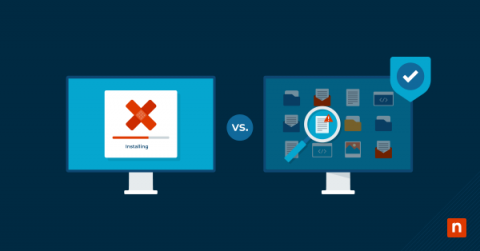
Patch Management vs. Vulnerability Management

Although the terms “patch management” and “vulnerability management” are often used interchangeably, they are not the same process. Patch management and vulneradbility management are two processes that go hand-in-hand towards supporting a secure, efficient, and up-to-date IT infrastructure. Compare patch management vs. vulnerability management and see why both are essential for a secure IT environment.

Q1 Roadmap Review & Q2 2023 Look Ahead

In our recent virtual meetup the VictoriaMetrics Founders team discussed some of our Q1 2023 highlights, including features highlights, the 2023 roadmap for VictoriaMetrics as well as first introduction to the upcoming VictoriaLogs. In this blog post, we’d like to share a summary of these highlights and a heads up on where to find our team in the coming weeks and months - starting with our participation at KubeCon Europe 2023.

Releasing Graphite Query Language in Open Source VictoriaMetrics

As many of our users and the wider monitoring community will know, Graphite Query Language is a query language for Graphite monitoring tools, which helps analyze data stored in it. Graphite is a well-known and respected pioneer in the monitoring space, which has seen a number of next generation monitoring solutions enter the scene … such as ourselves. It’s been used by a wide range of companies, which started using monitoring tools more than a decade ago.

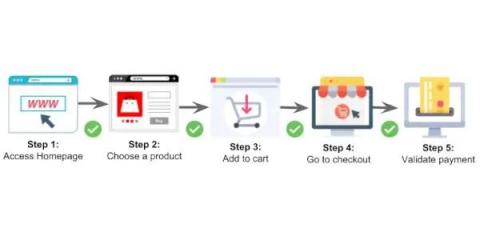
What Are the Main Drivers Behind Real-Time Transaction Monitoring?

Real-time transactions have become the new normal. In fact, MasterCard research found that consumers consider real-time payments more important than the Internet, next-day delivery, and utility services. As a result, banks and other financial institutions are increasingly turning toward real-time transaction monitoring. Real-time transaction monitoring solves some pain points of providing real-time payment capabilities.

Top 16 CDNs to Speed Up Your Website in 2023

A Content Delivery Network (CDN) is a network of servers or nodes spread around the world that stores and delivers the components of a website such as images, videos, or other static files. It can help both big and small websites deliver their content to users at the fastest speeds possible. If you’re new to the world of CDNs, it might seem intimidating when you’re trying to choose one that best fits your website.

What is Break/Fix Support - And Why You Need to Ditch it Right Away

The break/fix support system has been around since the beginning of IT support. It has remained the most popular model over the years for a reason: agents find it practical and straightforward. However, over the last few years, IT teams from around the world have been questioning its effectiveness and adopting new tools and strategies in order to build a more proactive support system.