Operations | Monitoring | ITSM | DevOps | Cloud

How to Enable Detection Rules via Elastic Security - Version 7.10

The detection engine brings automated threat detection to the Elastic Stack through the Security app in Kibana. As part of our belief in the power of open-source, Elastic Security has open sourced all our detection rules to work alongside the security community to stop threats at scale and arm every analyst. In this video, you’ll learn more about the detection engine and how to automate the protection of your data.
Cloud Cost Optimization & DevOps

See how leading enterprises are achieving continuous, DevOps-driven cloud and container cost. Our DevOps experts detail methods for embedding cloud cost optimization into DevOps pipelines, demo an extensible, best practice DevOps pipeline supporting continuous cloud FinOps, and showcase case studies of advanced enterprises successfully augmenting their DevOps to embrace systemic optimization.

Secure Your Cloud Transformation with Continuous Intelligence

CrowdStrike and Sumo Logic work together to identify security threats and defend against IOCs in a hybrid environment. Customers gain knowledge on adversaries which may be targeting their assets and organisation via strategic, operational and technical reporting and alerts. During this session, we’ll hear from Australian private health provider, NIB, on how Sumo Logic and CrowdStrike have worked together to help NIB secure its digital transformation and cloud environment.

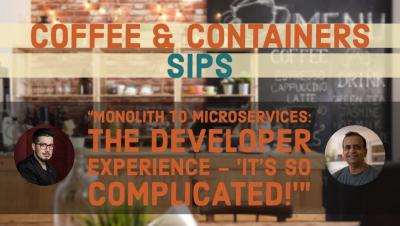
Sips - "Monolith to Microservices: The Developer Experience - 'It's so Complicated!'"

Coffee and Containers "Sips" are short clips from the regular Coffee and Containers web series. By 2022, IDC predicts that 90% of all new apps will feature a microservices architecture. Some of the drivers behind that are the improved ability to design, debug, update and leverage third-party code, and more. However, transitioning an existing application from a traditional monolith architecture to microservices architecture can be very challenging. How do we get started down the microservices path?

Enabling Secure Kubernetes Multi-Tenancy with Calico Enterprise

When you have different teams interacting with a Kubernetes cluster you need to think about the security, privacy, and observability challenges associated with multi-tenancy: How to provide each team with access to the specific resources they need, in a way that allows the team to be agile, without risking impacting other teams? In this session, we’ll explore the Kubernetes multi tenancy concepts and design patterns needed for successful enablement of multi-tenancy within your Kubernetes clusters using key capabilities of Calico Enterprise.