Operations | Monitoring | ITSM | DevOps | Cloud

The latest News and Information on Log Management, Log Analytics and related technologies.

What to Expect When You Are Expecting: Cribl Data Routed to a Cribl Destination

For so many, the unknown sucks. Knowing or knowing what to expect is best. Why? Because it puts us at ease, and peace and gives us a calm sense of knowing without having experienced it yet. That’s part of my mission here at Cribl. I talk to a lot of people and the one consistent part of these conversations is the unknown.
How to Monitor Cloudflare with OpenTelemetry

With observIQ’s latest contributions to OpenTelemetry, you can now use free open source tools to easily monitor Cloudflare. The easiest way to use the latest OpenTelemetry tools is with observIQ’s distribution of the OpenTelemetry collector. You can find it here. In this blog, the Cloudflare receiver is configured to monitor logs locally with OTLP– you can use the receiver to ship logs to many popular analysis tools, including Google Cloud, New Relic, OTLP, Grafana, and more.

Using Elastic Anomaly detection and log categorization for root cause analysis

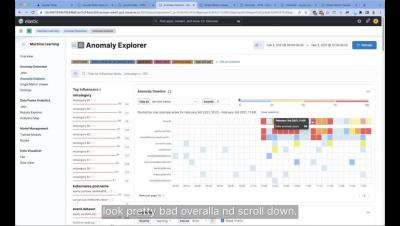
Elastic's machine learning helps support several easy-to-use features to help determine root cause analysis for logs. This includes anomaly detection and log categorization, which are easy-to-use features aiding in analysis without the need to understand or know about machine learning.

Revolutionize Your Observability Data with Cribl.Cloud - Streamline Your Infrastructure Hassle-Free!

Cribl.Cloud provides control over observability data without the hassle of running infrastructure. Cribl.Cloud quickly spins up all Cribl products — Stream, Edge, and Search — in just a few minutes.Teams can get working quickly and make their observability data valuable while Cribl handles scaling and security.

Monitoring and troubleshooting - Apache error log file analysis

Your Apache HTTP server access and error logs contain a wealth of actionable insights about potential server configuration and web application issues. The problem is that this information is hidden within millions of log messages, so you need analytics to efficiently extract these insights so you can respond to problems before they impact your users. Apache log analysis revolves around two activities: monitoring and troubleshooting.

What is log management in DevOps?

DevOps teams are used to working with data that is spread out across lots of different systems and environments. In organizations that have achieved tight collaboration with security teams to transition to DevSecOps, this is even more true! Log management is part of how all these teams keep track of information and make vital business decisions. It’s important to take a moment to understand what is meant by log management.

What is log management in security?

Cyber crimes are expected to cost the world roughly $10.5 trillion per year by 2025, according to Cybersecurity Ventures. And these attacks don’t just cost money. Businesses impacted by these kinds of crimes can expect to experience not only financial losses but also loss of productivity, damage to their reputation, potential legal liabilities and more.

What is log management used for?

Faced with an important business decision? Do you have the data you need to make it? Odds are, you probably don’t. Or, if the data is captured somewhere, can you count on it being in one place and easily accessible? This is a common issue, easily solved by proper log management. This practice is vital for data-driven businesses, helping you maintain security, troubleshoot operations more quickly and enhance user experience.

Ship OpenTelemetry Data to Coralogix via Reverse Proxy (Caddy 2)

It is commonplace for organizations to restrict their IT systems from having direct or unsolicited access to external networks or the Internet, with network proxies serving as gatekeepers between an organization’s internal infrastructure and any external network. Network proxies can provide security and infrastructure admins the ability to specify specific points of data egress from their internal networks, often referred to as an egress controller.

Getting Started with Logz.io Cloud SIEM

The shortcoming of traditional SIEM implementations can be traced back to big data analytics challenges. Fast analysis requires centralizing huge amounts of security event data in one place. As a result, many strained SIEM deployments can feel heavy, require hours of configuration, and return slow queries. Logz.io Cloud SIEM was designed as a scalable, low-maintenance, and reliable alternative. As a result, getting started isn’t particularly hard.