Catchpoint Announces Native Support for Google's Core Web Vitals
Offering the most accurate, actionable and comprehensive metrics for digital experience management; improving user experience and search ranking.


The latest News and Information on Monitoring for Websites, Applications, APIs, Infrastructure, and other technologies.
VMware has recently released vSphere 7 Update 2, and there is a lot of new stuff to look out for. vSphere, VMware’s server virtualization product, has been an industry favorite for a long time. The vSphere 7 came out in April 2020, and this is so far the second update to it, hence the name. When you look at the changes they’ve rolled out, you’ll know that they are really focusing on some key areas. As a result, VMware infrastructure is getting pretty solid and modern.
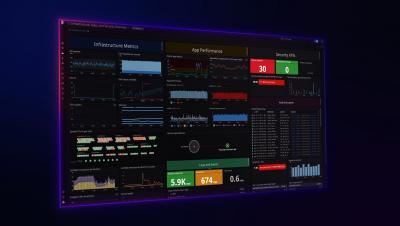
As applications move from monolithic architectures to microservices-based architectures, DevOps and Site Reliability Engineering (SRE) teams face new operational challenges. Microservices are updated constantly with new features and resource managers/schedulers (like Kubernetes and GKE) can add/remove containers in response to changing workloads. The old way of creating alerts based on learned behaviors of your monolithic applications will not work with microservices applications.
Log management stopped being a very simple operation quite some time ago. Long gone are the “good old days” when you could log into the machine, check the logs, and grep for the interesting parts. Right now things are better. With the observability tools that are now a part of our everyday lives, we can easily troubleshoot without the need to connect to servers at all. With the right tools, we can even predict potential issues and be alerted at the same time an incident happens.
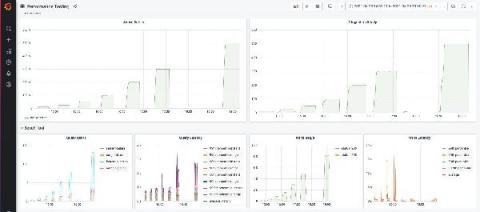
Since we launched Grafana Enterprise Metrics (GEM), our self-hosted Prometheus service, last year, we’ve seen customers run it at great scale. We have clusters with more than 100 million metrics, and GEM’s new scalable compactor can handle an estimated 650 million active series. Still, we wanted to run performance tests that would more definitively show GEM’s horizontal scalability and allow us to get more accurate TCO estimates.
Raygun enables you to track errors in your web and mobile applications and set up a process to manage them. This guide will help you set up Raygun to build more stable software.
Software teams use cron jobs to handle many important tasks like database backups and maintenance scripts. Cron jobs make sure that your applications are behaving as they should, but cron job failures are often silent and not noticed until the problem becomes worse. In this guide, we will learn how to stay aware about cron job failures by using Healthchecks.
We are in this together. As part of our continuous efforts to meet customer expectations, we have recently added Core Web Vitals to our performance measurement programs. We are happy to share that these metrics are now a native part of the Catchpoint Platform. DevOps’ SREs, Platform Operations Engineers, and business and monitoring strategists alike will realize a series of key benefits from this addition.
Splunk Distro for OpenTelemetry is a secure, production-ready, Splunk-supported distribution of the OpenTelemetry project and provides multiple installable packages that automatically instruments your Java application to capture and report distributed traces to Splunk APM (no code changes required!), making it easy to get started with distributed tracing!