The latest News and Information on Monitoring for Websites, Applications, APIs, Infrastructure, and other technologies.
The success of a business is dependent on two key components: a quality product/service that is being offered and a team that can market and communicate about that product/service effectively. However, that team needs to first be able to communicate with each other to brainstorm and strategize. With many businesses still working on a remote or hybrid model because of the global pandemic, digital communication has become an invaluable part of productivity.
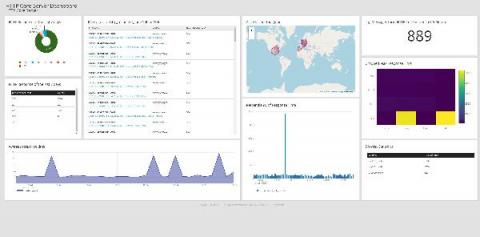
Log exploration and analysis is a key step in troubleshooting performance issues in IT environments — from understanding application slow downs to investigating misbehaving containers. Did you get an alert that heap usage is spiking on a specific server? A quick search of the logs filtered from that host shows that cache misses started around the same time as the initial spike.
This is a basic introduction to Lambda triggers that uses DynamoDB as an event source example. We talk a lot about the more advanced level of Lambda triggers in our popular two-part series: Complete Guide to Lambda Triggers. If you want to learn more, read part one and part two. We’re going back to the basics this time because skipping some steps when learning something new might get you confused. It tends to get annoying, or it can even make you frustrated. Why?
The future of enterprise IT stacks is the cloud. In fact, according to a 2019 Gartner post, when we say “cloud infrastructure,” 81% of people really mean multi-cloud. Considering the analyst took this survey prior to the pandemic, we can safely assume that the number of companies with multi-cloud stacks is probably higher than this. Companies choose a multi-cloud strategy for a lot of reasons, including making disaster recovery and migration easier.
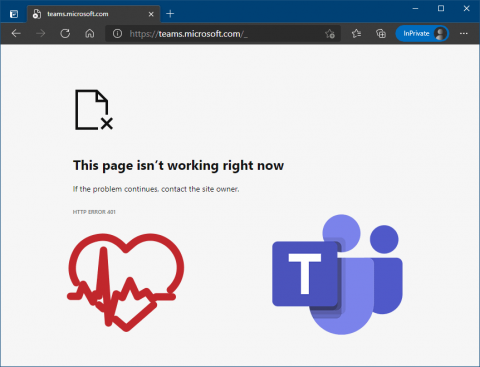
This early AM on the East Coast, Teams experienced an access outage. The Exoprise sensors detected this outage an hour before Microsoft published a report on the issue. Here’s an example of what you get when you attempt to sign in, fresh, to Microsoft Teams.
We’re pleased to introduce ManageEngine RMM Central, a unified remote monitoring and management solution. Maintaining the IT infrastructure and systems of client networks is a herculean task for IT service providers. Multiple tools perform various capabilities in network management, be it maintaining or managing workstations, laptops, servers, and other networks.
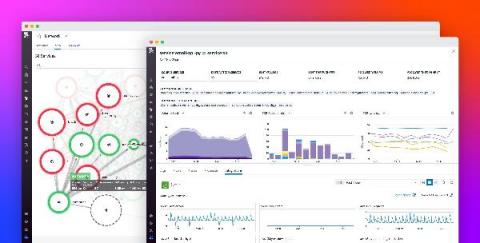
Your modern cloud-hosted applications rely on a number of key components—such as databases and load balancers—that are managed by the cloud provider. While these cloud resources can reduce the overhead of maintaining your own infrastructure, capturing and contextualizing monitoring data from services you don’t own can be difficult.