Operations | Monitoring | ITSM | DevOps | Cloud

The latest News and Information on Monitoring for Websites, Applications, APIs, Infrastructure, and other technologies.

Globally used DNS provider Network Solutions suffers an outage

On Wednesday 17th March, globally used DNS provider Network Solutions experienced the dreaded downtime we all hope to avoid. Starting at 4am Eastern time and continuing through to Thursday 18th with still no resolution, it’s affected thousands of people across the world. Network Solutions are the 4th biggest domain registrar in the world, with nearly 7 million users worldwide.
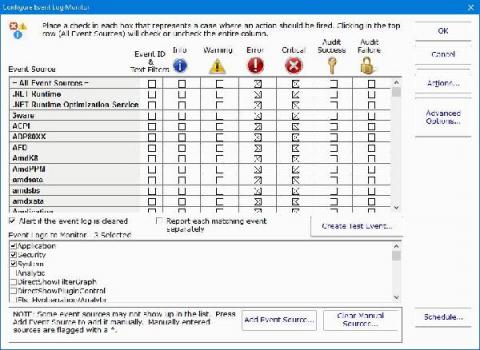

How to Configure PA Server Monitor to Monitor Your Event Logs

Did you know that you could configure PA Server Monitor’s Event Log Monitor feature to monitor one or more of your event logs? The event logs can include standard application, security, and system logs, as well as any custom event logs you want to monitor. With our server monitoring software, you have complete control and flexibility over the types of events you want to monitor.

Monitor .NET runtime metrics with Datadog

If you are a .NET developer, monitoring runtime metrics can help you troubleshoot bugs and detect resource inefficiencies in your applications. With Datadog, you can easily collect, visualize, and alert on key .NET runtime metrics, including exceptions, garbage collection statistics, thread count, and more. We have fully integrated .NET runtime metrics into Datadog APM so that you can easily view them alongside your distributed traces, logs, and other telemetry.

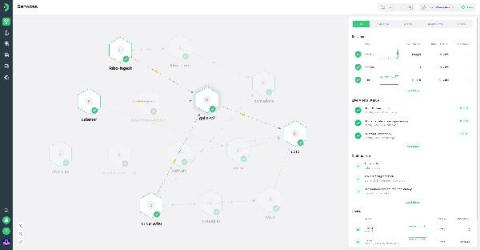
Announcing the All-new Kamon APM Service Map

Kamon APM wakes up today with a new home page for all your observability data: the all-new Kamon APM Service Map! The Service Map shows a real-time representation of all your microservices and the dependencies between them, combined with health status and easy access to the most important bits of data from your entire infrastructure.

The Easiest Way to Monitor Ruby: Automatic Instrumentation

Setting up a proper monitoring overview over your application’s performance is a complex task. Normally, you’d first need to figure out what you need to monitor, then instrument your code, and finally make sense of all the data that has been emitted. However, with a few things set in place, and an APM that natively supports Ruby, it’s easier than ever to take this step. In this post, we’ll show you how you can do it too.

Infrastructure Monitoring Tutorial: Getting Started Sending Prometheus Metrics

This Logz.io Infrastructure Monitoring tutorial will cover how to get started with our latest product, our new Prometheus-as-a-Service metrics solution that’s based on Prometheus. Engineers monitor metrics to understand CPU and memory utilization for infrastructure, duration and serverless execution, or for network traffic. For more advanced metrics monitoring operations, teams can send custom metrics to monitor signals like the number of active users.

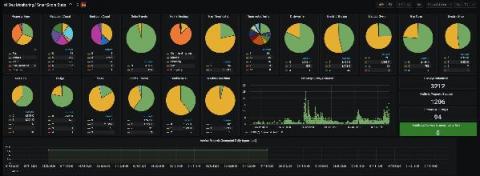
Why implementing Grafana Enterprise was a bright idea for U.K. energy supplier Utilita

Energy efficiency is a term often used to describe appliances or light bulbs. But when it comes to business, making sure your sales team — and customers — are being efficient with their personal energy is a big key to success. That was a major lesson learned by Utilita, the U.K.’s first and only specialist Smart Pay As You Go Energy supplier.

How to Build a Monitoring Application in Less Than 10 Minutes

This talk shows how to use Tasks, Flux, dashboards and monitoring and alerting in InfluxDB Cloud to create an external service or website monitor. This video is a simple example for everyone to use as a template for their own custom monitoring applications built on top of InfluxDB Cloud.

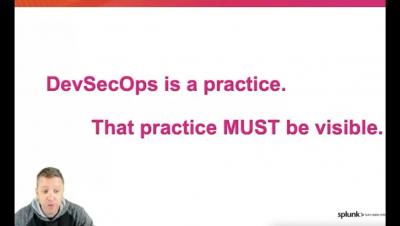
DevSecOps is a Practice. Make it visible.

While DevSecOps feels like just another industry term, engineering teams everywhere are feeling greater and greater accountability for the security and stability of applications they build. DevSecOps is a practice, not a product. The practice consists of three primary use cases. For enterprises to be successfully implementing DevSecOps practices they need to focus on visibility, consistent communication, and data-driven incident response.