Operations | Monitoring | ITSM | DevOps | Cloud

The latest News and Information on Monitoring for Websites, Applications, APIs, Infrastructure, and other technologies.

Reducing Mean Time to Resolution With Auvik

When something goes wrong in your network, you often don’t find out about it until your users are affected. By then, you’re on the receiving end of an angry phone call and you’re left scrambling to identify the issue and understand its root cause. As soon as you hang up (if the affected user even lets you hang up), you’re in a race against the clock.


Is your logging ready for the future?

Log scaling is something that should be top of mind for organizations seeking to future-proof their logging solutions. Logging requirements will grow through use, particularly if not maintained or utilized effectively. There are barriers to successful log scaling, and in this post we’ll be discussing storage volume problems; increased load on the ELK stack, the amount of ‘noise’ generated by a growing ELK stack, and the pains of managing burgeoning clusters of nodes.

Monitoring Jenkins: Essential Jenkins Logs to Watch Out For

Monitoring Jenkins is a serious challenge. Logging is often overlooked, but it provides a wealth of information about the health of your Jenkins instance. The following are some approaches to generating informative logging to these issues, that can help to monitor and provide suitable explanations of where the problems lie; even identifying what the possible solutions are.

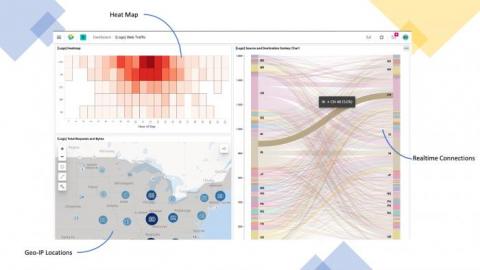
Kibana Dashboard Tutorial: Spice up your Kibana Dashboards

When it comes to dashboarding, Kibana is king. Since its release Kibana has changed the way businesses visualize data. Kibana is a fairly intuitive platform and offers some seriously impressive ways to visualize data. In this kibana dashboard tutorial, we are going to help you unlock the full potential of the platform and help you become a Kibana guru. When it comes to visualizing data Kibana is well suited for monitoring logs, application monitoring, and operational intelligence.

Traefik and Prometheus for Sites Monitoring

Your website is the face of your business - it should urge the customer to buy your product. Knowing this, you spend weeks on a great web design and user experience. But that’s only the visible part, what about your site’s infrastructure? In order to make your website as optimized as possible, you need metrics about everything such as customer behavior, load speeds, proxy request counts, load balancers and more.

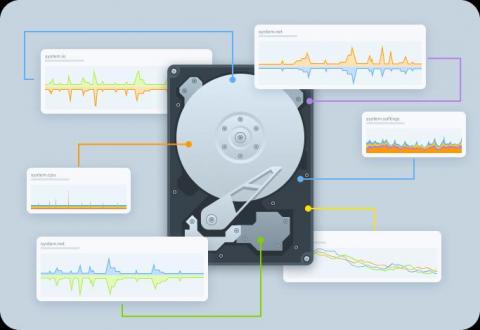
The reality of Netdata's long-term metrics storage database

The perception that Netdata is only capable of short-term metrics storage is a myth. It’s a pervasive myth we still see in blog posts and through community engagement, despite it being false for more than a year. However, like all myths, this one on metrics storage began with a kernel of truth. When Netdata first flourished as an open-source project in 2017 and 2018, the default metrics database was RAM-only.

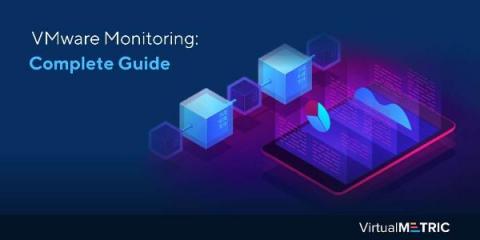
VMware Monitoring: Complete Guide

The dawn of virtualization and virtual machines or VMs have brought about massive changes in the industrial and commercial sector. Every organization, be it large or small, are now implementing virtual machines on different scales, and it’s saving them a lot of money and resources. But while virtualization is an incredibly powerful computing technology, it is by no means simple to handle.

Using SolarWinds Loggly With MongoDB New Structured Logs

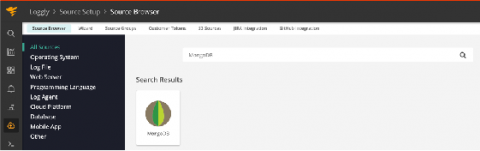
Last month, MongoDB released v4.4 of their database; the new release contains several changes and improvements, but the introduction of structured JSON logging caught our eye, which makes it easier to extract valuable insights from the logs using products like SolarWinds® Loggly®. In this post, we’ll review how to get started sending your MongoDB logs to Loggly and some of the insights you can easily get from your server logs when you upgrade to the latest version.