Operations | Monitoring | ITSM | DevOps | Cloud

The latest News and Information on Monitoring for Websites, Applications, APIs, Infrastructure, and other technologies.

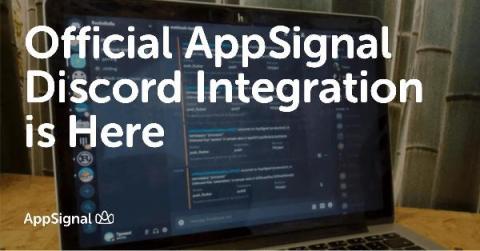
Official AppSignal Discord Integration is Here

Starting today, you can receive notifications from AppSignal in your Discord channels. With AppSignal, you get endless insights with just a few minutes of work. We already have a whole list of out-of-the-box integrations besides Slack and Discord. AppSignal was built with developers in mind and that is why it also allows you to customize it and build upon it with your solutions. You can use webhooks as the ultimate free form to get alerted on any URL you want.
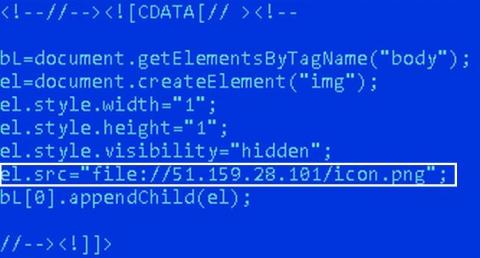

Breaking down the San Francisco airport hack

On April 7, 2020, the San Francisco International Airport (SFO) released a notice confirming that two of its websites, SFOConnect.com and SFOConstruction.com, were targets of a cyberattack in March 2020. The attack has been attributed to a hacker group that was attempting to steal the Windows logins of the airport’s employees. When we hear news about cyberattacks, a few typical, yet crucial questions spring to mind: How did the attackers perform the cyberattack?

Work from home series, part 1: Remote authentication and password management

One of the primary concerns of IT admins when employees start working remotely is authenticating users. How can employees securely log in to their accounts while working remotely? What happens if users get locked out of their accounts? These are some of the questions that organizations are asking themselves when implementing work-from-home policies.

Custom Alerts Using Prometheus in Rancher

This article is a follow up to Custom Alerts Using Prometheus Queries. In this post, we will also demo installing Prometheus and configuring Alertmanager to send emails when alerts are fired, but in a much simpler way – using Rancher all the way through. We’ll see how easy it is to accomplish this without the dependencies used in previous article.

Summary of Icinga Virtual Meetup 2020/04

Last week we finally had our first virtual Icinga Meetup. Since we had some trouble at our very first try, we were even more excited and nervous about this. This time, after a couple of minutes it was clear that everything will go well from the technical perspective. We were prepared content-wise as well and almost all of the registered attendees showed up. Experiencing the first couple of minutes going so well was a huge relief and, in the end, the whole meeting was a great event.

Monitoring Amazon EKS logs and metrics with the Elastic Stack

To achieve unified observability, we need to gather all of the logs, metrics, and application traces from an environment. Storing them in a single datastore drastically increases our visibility, allowing us to monitor other distributed environments as well. In this blog, we will walk through one way to set up observability of your Kubernetes environment using the Elastic Stack — giving your team insight into the metrics and performance of your deployment.

MITRE ATT&CK® round 2 APT emulation validates Elastic's ability to eliminate blind spots

Six months ago we celebrated the joining of forces between Endgame and Elastic under the banner of Elastic Security and announced the elimination of per endpoint pricing. Simultaneously, while the newest members of Elastic Security were getting acquainted with the Elastic SIEM team, a few of our analysts were locked away in an office at MITRE HQ for round 2 of MITRE’s APT emulation.

Should I Stay or Should I Go? A cloudy decision

If you’ve been operating in the cloud for some time now, chances are your business has changed since you first made that move. Has your cloud usage grown considerably—and your OpEx costs? Is that just the cost of doing business in the cloud? It doesn’t have to be. Here’s how you can rationalize your infrastructure and determine if there are cloud expenses you can reclaim and even if it makes sense to move some of your cloud deployments into co-location.

Best Practices for Data Tagging, Data Classification & Data Enrichment

Data classification can be broadly defined as the process of organizing and tagging data by categories so that collected data may be used and protected in the most efficient way possible. Sumo Logic is an analytics platform that can ingest almost any type of machine data. This data can be structured or unstructured, come in the form of event logs and messages or as time-series metrics. Once the data has been ingested into the platform, it can be leveraged for a wide variety of use cases.