Operations | Monitoring | ITSM | DevOps | Cloud

The latest News and Information on Monitoring for Websites, Applications, APIs, Infrastructure, and other technologies.

How's Your Wi-Fi Signal? IT's Remote Work Blind Spot

Close your eyes for a moment and think of the least tech-savvy person in your family. Ok, open them. This person, even with their limited tech skills, probably understands that the farther you stray from your Wi-Fi router, the worse your connection will be. Incredibly, Chris and I can count between us over a dozen customers whose IT support teams failed to consider this one factor. How could something so simple fly under the radar of enterprise IT?

What Causes Website Downtime?

We’ve all experienced websites which are unreliable, and appear to be offline when we need to access them. Perhaps you have had a similar experience with your own website, and know how damaging downtime can be to your bottom line and to your brand image. Whether a website is ‘down’ for an extended period of time, or for a matter of minutes, it can be extremely frustrating for anyone who is trying to access the site in that period.

Top 11 Digital Tools to Boost Your Productivity

As far as productivity is concerned, you cannot afford to stay complacent. That is because, without productivity, it is not possible to thrive in this age of stiff competition. Today, you have numerous things to do, perform multitasking to stay ahead of the competition and if you haven’t done so yet, your business will take a backseat.

So How Are Developers Feeling During the COVID Health Crisis? We Decided to Ask...

As a developer-focused company, InfluxData is always interested in how the community is doing. During the first two weeks of April, we conducted an online survey to find out how developers are handling life and work during the COVID-19 pandemic. A total of 324 self-identified software developers/engineers from across the world responded (46% from North America, 44% from Europe, 9% from South America, and 1% from Africa) to share their feelings during this unprecedented global event.

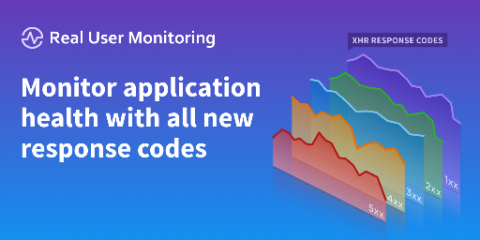
Monitor application health with the new response codes tab in RUM

In this release, we’re bringing an all-new section to Real User Monitoring to provide another way for you to monitor application health; the Response Codes tab. Real User Monitoring now tracks the response codes from XHR/AJAX calls made in your web application using the JavaScript provider. You can now: Stacked view of your application’s response codes This feature brings vital insight into the health of your applications so you can deliver the software experiences your customers deserve.

Ruby performance tips - how to optimize code from the ground up

Over the last few years, more developers have taken Ruby as their staple programming language. Who can blame them? It certainly has a lot of appealing features. For one, the syntax is easy to read and debug. A default MVC architecture within most Ruby frameworks is another alluring factor that may have had you using it as well.

March 2020 Outage Report

It’s pretty safe to say that March was the month where everything changed for most of us. By now, enough has been said on coronavirus and we need not add to the pile. Our concern remains continuous uptime, and reporting on outages as teachable moments. During this time of heightened tensions, let’s take a few moments to do some post mortem work and see what we can learn from March’s outages.

SQL Server, Part 2: Authentication and authorization mechanisms in SQL Server, simplified

In the previous blog of this series, we discussed how monitoring SQL Server activities helps secure databases. The database security can further be reinforced by carefully configuring the authentication and authorization mechanisms for database accesses. In this blog, we’ll briefly explain the various authorization and authentication mechanisms of SQL Server and some best practices you can follow.

Your Status Page Deserves Its Own Domain

Public status pages have risen to become an essential requirement for all publicly facing web services. A well-constructed status page is a hallmark of a customer-centric organization. Status pages provide transparency and help reduce customer support requests during an inevitable outage. With sufficient component details, they can serve as useful information hubs for customers experiencing issues. There are numerous services to make setting up a status page simple and inexpensive.