Operations | Monitoring | ITSM | DevOps | Cloud

The latest News and Information on Monitoring for Websites, Applications, APIs, Infrastructure, and other technologies.

Sentry + Stripe Projects: From Zero to Error Monitoring in Two Commands

No signup form. No dashboard. No copy-pasting DSNs. Sentry is now a provider on Stripe Projects, which means you can provision a fully configured Sentry project — error monitoring, tracing, and session replay — straight from the CLI in two commands. In this demo, we walk through the full workflow: initializing a project, provisioning Sentry, upgrading and downgrading plans, using magic login to jump straight into your dashboard, and letting a coding agent (Claude Code) handle it all for you.

New in the Honeycomb Academy: Learn to Use the Honeycomb MCP

Two things happen when engineers first connect the Honeycomb MCP to their AI assistant. The first is the blank page problem. The Honeycomb UI gives you something to react to: a heatmap, a query builder, a trace to click into. An AI assistant gives you a cursor and nothing else. When you don't know where to start, that's a hard place to be. The second shows up right after you get past the first one. You ask a question, you get a confident-sounding answer, and you're not sure whether to trust it.

Two AI agents, one incident: Rocky AI comes to the terminal

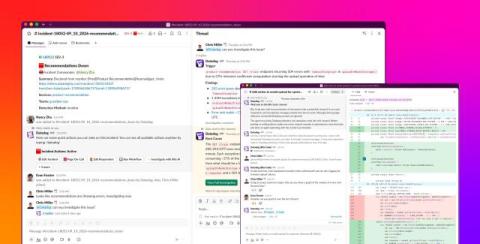
A Playwright Check fails at 2 am. The login flow is broken. Until today, that alert triggered a human to get up, open the Checkly dashboard, copy Rocky AI root cause analysis (RCA), and then tell an agent to get to work. There were two AI agents, one incident, and no way for them to talk to each other. The extended checkly checks and new checkly rca CLI commands close that gap. Your coding agent can now pull Rocky AI's analysis into its ongoing work, read the diagnosis, and go fix the code.

How to run a proof of concept that de-risks your monitoring decision

Part 3, key insights from a fireside chat with Chris Yates. Read part 1 here, and part 2 here. Most database monitoring proof of concepts (POCs) answer the wrong questions. Here's how to structure a proof of concept that genuinely de-risks your vendor decision with the questions to ask during the process. A POC is often treated as the final hurdle in vendor evaluation, but too often, it becomes theatre. A guided tour of the flashiest features, run by one person, under unrealistic conditions.

End-to-End Trace Propagation Across SQS and Lambda with OpenTelemetry

SQS doesn't propagate trace context automatically. You instrument both sides, deploy, and get two disconnected traces. This post shows how to wire them into one waterfall — and the ESM format gotcha that silently breaks it every time. Prathamesh works as an evangelist at Last9, runs SRE stories - where SRE and DevOps folks share their stories, and maintains o11y.wiki - a glossary of all terms related to observability.

5 Best SOC 2 Continuous Monitoring Tools for SaaS: Closing the 20% Manual Evidence Gap

Landing a big-logo customer feels great-until their security questionnaire hits your inbox. For most B2B SaaS teams, SOC 2 compliance is the roadblock. You connect a tool, dashboards turn green, and then stall: about 20% of evidence still needs screenshots, sign-offs, or frantic Slack chases. That last-mile grind drags engineers back into spreadsheets just when the audit seems done.

How Monitoring Tools Enhance Visibility Across Digital Platforms

There is growing confusion about what all the monitoring a business needs to do. As businesses enter new digital platforms to reach customers, they also need to establish monitoring of those new platforms in order to be successful. Of course, there are new digital platforms every day, including cloud services, websites, social media hubs and other customer service channels. While many of these platforms are always on, always collecting data for a business to mine, there is little in organization or technology to suggest that one person could monitor all of these platforms manually.
Sponsored Post

Cost Control in SAP BTP: The Critical Need for Automation

The cloud is the cheapest processing you can buy... until you get the bill! Unfortunately, Cloud service costs are notoriously opaque when it comes to transactional and operations costs. The results can be unexpected bills and even damage to the ROI of cloud programs. SAP BTP is no exception, but it doesn't have to be this way. Good FinOps discipline is readily available for BTP - and beyond avoiding "bill shock" such monitoring is just good operational hygiene, preserving budget and resources for productive investment.