Operations | Monitoring | ITSM | DevOps | Cloud

The latest News and Information on Monitoring for Websites, Applications, APIs, Infrastructure, and other technologies.

Why Your Agentic Workflow Succeeds and Still Gets It Wrong

Agentic workflows are reshaping how engineering teams operate, fetching context, synthesizing decisions, and shipping results across systems without human intervention. But the same design that makes them powerful adds risk in production. Agents do not crash when they hit bad data; they synthesize around it, substituting a stale value, an empty page, or a missing field for the result they were supposed to capture.

Generate Synthetic Time Series Data in InfluxDB 3

Getting InfluxDB 3 up and running is a pretty lightweight process with the installation script. Getting time series data into it is the next step, and for exploration, basic testing, or scenarios where you don’t have a stream of time series data ready to write, that can be a point of friction. That hurdle is particularly high when you want to test the rest of the system around the data you’d be writing.

Introducing the StatusGator Notion Integration

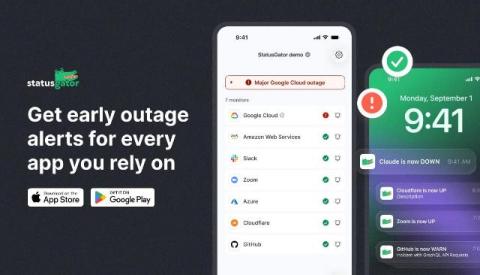
Many teams use Notion as the central hub for documentation, runbooks, incident response, and operational planning. When an outage occurs, the last thing you want is for responders to jump between multiple tools searching for information about the health of critical vendors and dependencies. That’s why we’re excited to introduce the StatusGator Notion integration.

Tencent Cloud: When systems start reacting to themselves

Distributed systems don't just fail. They adapt. Services in Tencent Cloud environments are tightly interconnected. Compute, load balancing, databases, and networking layers continuously respond to each other based on changing conditions. Under normal load, this coordination stays in the background. As pressure builds, the behavior shifts. The system does not degrade in a straight line. Instead, it starts adjusting itself.

The Next Evolution of Infrastructure Observability

Operational visibility is becoming increasingly important as infrastructure teams are asked to support AI initiatives, automation goals, cost accountability, modernization efforts, and growing operational complexity at the same time. Most are expected to do it without expanding headcount, introducing additional risk, or rebuilding the environment from scratch. Those expectations are changing the role of infrastructure operations.

Proactive Alerting with AIOps

Modern IT environments generate huge volumes of telemetry across infrastructure, applications, cloud services, and networks. Teams now have more data than ever, but that does not automatically lead to better decisions. In many organizations, the real problem is no longer visibility alone. It is the ability to identify which signals matter, understand what they mean, and respond before users or business services are affected.

Catch visual regressions with Snapshots, now in beta

Sentry Snapshots diffs screenshots on every commit and blocks the PR if there are any visual changes so you can confirm they’re intentional. Users don’t interact with code, they interact with something they can see and touch. Snapshots gives you a lightweight way to test it. It’s easier than ever to change code. It’s also easier than ever to trade quality for speed. Modern codebases need guardrails to ensure correctness.

ChangeTower User Stories - Turning Public Web Changes into Recruitment Pipeline

For modern business teams, the public web is the single largest source of competitive and market intelligence — and one of the hardest to keep up with. Compliance teams track changes to regulations, policies, and terms. Competitive intelligence teams watch rivals’ pricing, positioning, and personnel. Recruiters and business developers monitor hiring activity that signals new opportunities. In every case, the value lies in noticing a change before anyone else does.

Federated Search | From Silos to Insight | Azure Blob Schema Discovery with Splunk's Crawler

This walk-through shows how Splunk's Cloud can discover schema and partition keys for Microsoft Azure Blob Storage datasets and create searchable Splunk managed tables. Once the data is mapped, analysts can use Splunk Federated Search to query Azure Blob data where it lives, bringing cloud-resident logs into security, observability, and operational work-flows without re-ingesting the data.