The latest News and Information on IT Networks and related technologies.
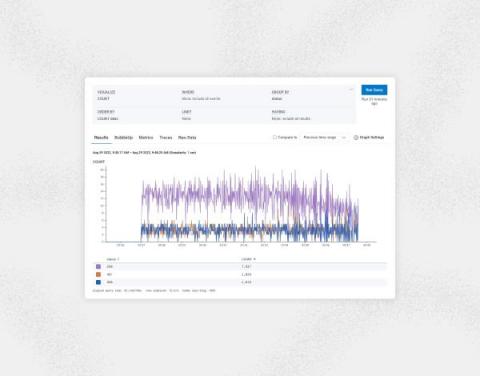
Written by Andrew Puch and Brian Langbecker You use NGINX as a proxy for your application, and you want to leverage your favorite features in Honeycomb to help make sense of the traffic data. Have no fear: Honeycomb is more than capable and ready to help! Things you will need: Before you start with the instructions, let’s discuss a lightweight tool called Honeytail. This utility will tail log files, parse the various formats, and send the data to Honeycomb.
When SecurityDAM (acquired by Radware), a DDoS protection service provider, needed to upgrade their NOC operations, they tested out multiple solutions before choosing MoovingON.ai. From increasing efficiency and visibility to improving ticket resolution times and runbook automation, MoovingON.ai provided the NOC manager and team with everything they needed to run operations more smoothly and effectively.
The reasons that cause applications to run slowly are many and varied. Narrowing down the cause behind any particular instance is time-consuming if the correct network monitoring tools are not in place. The delay in finding a root cause and fixing it always has a negative impact on users of the affected applications.
A recent Exoprise customer survey found that 60-70% of application problems occur within the enterprise environment or home network/ISP. So, if you need to resolve Teams call quality problems, it's best to investigate your network before you try and finger point to Microsoft. In today's article, we see how this applies to Exoprise when team members work from home or in a hybrid work setting. Last Friday, at about 10:00 am EST, I jumped on an impromptu video call with one of my sales colleagues to discuss an ongoing marketing project. Although I am based in the Northern Virginia area, my comrade (as they say in British English!) is from Boston.