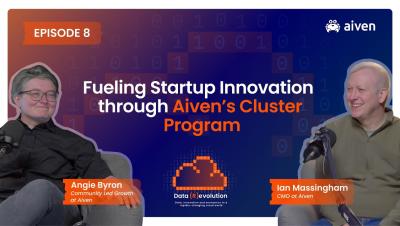
Navigating the startup landscape in the cloud era is crucial. But luckily, the Aiven platform empowers startups to succeed in this competitive and dynamic environment.
Today we’re launching Fair Source, a new approach to software sharing that is safe for companies to adopt and developers to use. Before Fair Source, companies that wanted to engage the developer community with their core products often did not know how to do so while maintaining control over their roadmap and business model. The result is that most software products today are closed-source. With Fair Source, companies have a new option. The Fair Source option is not theoretical.
Welcome to Canonical's AI Summer Camp. Join 5 essential trainings on AI from Canonical experts and level up your skills while on holiday. Episode 1: How to build LLMs with open Source?
Canonical announces collaboration with DFI and PIONIX The global transition towards electric vehicles (EVs) marks a major shift in the ongoing efforts against climate change and towards sustainable energy solutions. With EV sales skyrocketing to 14 million units in 2023, the demand for efficient and reliable EV charging infrastructure has never been more pressing. Addressing this need requires innovation, collaboration, and the use of cutting-edge technology.
Optimize PostgreSQL and MySQL queries in 60 seconds. Submit a slow SQL query to get it optimized for free, including indexing recommendations and automatically re-written optimized query.
3). The complexities of real-time data streaming and auto-scaling in the cloud are no joke. But three are solutions to make it more simple and efficient. In this Data (R)evolution episode, Matan Mizrahi and Filip Yonov join us to discuss how Kafka effectively handles and optimizes data streams, the pursuit of standardized APIs, and the vital role of AI in optimizing complex systems. They also share how AI and open-source tools are transforming the landscape. Tune in to hear about the evolution of data streaming and the transformative impact of AI and cloud-native solutions.
Jaeger, the popular open-source distributed tracing system, is getting a major upgrade with the upcoming release of Jaeger v2. This new version is a new architecture for Jaeger backend components that utilizes OpenTelemetry Collector framework as the base and extends it with Jaeger’s unique features. It promises to bring significant improvements and changes, making Jaeger more flexible, extensible, and even better aligned with the OpenTelemetry project.
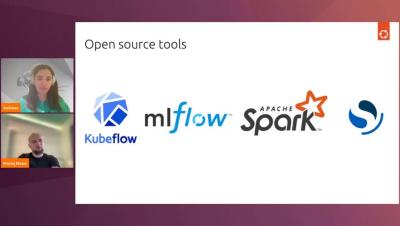
Join Josh Mesout, CIO of Civo, in this workshop where we simplify AI and ML, focusing on deploying large language models (LLMs) using open-source tools. Learn how to leverage Civo infrastructure, understand the benefits of open-source models, and gain practical insights into setting up your own AI deployment. Ideal for software engineers and tech enthusiasts looking to reduce reliance on ChatGPT and take control of their machine learning models.
The current landscape of open-source software (OSS) in enterprises is characterized by a strategic shift towards open-source solutions for critical infrastructure and development needs. Enterprises increasingly rely on OSS to power their applications, manage data, and automate their deployment pipelines, making OSS an integral part of the software development lifecycle.