Operations | Monitoring | ITSM | DevOps | Cloud

The latest News and Information on CyberSecurity for Applications, Services and Infrastructure, and related technologies.

Is Your Home Built to Last? Investing in Cloud-Based ITSM for a More Secure Tomorrow

Buying a home requires thoughtful planning and takes a significant amount of time and resources. Beyond your list of must-haves, you’ve likely kept tabs on houses of interest to you, the state of the market, how safe the neighborhood is, and more. Another factor in your decision is how the house is equipped to grow with you—will it continue to meet your needs in the next five years? It’s critical to establish a sound foundation that works for you today and in the future.

The DevSecOps Cultural Transformation

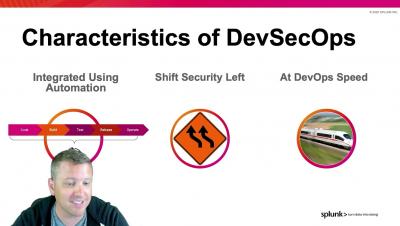
Let’s take a moment and think about security in your organization. Security is often separate from other engineering teams such as development, operations, networking, IT, and so forth. If you narrow down your focus to specifically releasing new software or features and functions in existing software, you’ll find that while development and operations are working together very quickly and efficiently, they’re still vaulting these functions and features over to security.

Hunting for Lateral Movement using Event Query Language

Lateral Movement describes techniques that adversaries use to pivot through multiple systems and accounts to improve access to an environment and subsequently get closer to their objective. Adversaries might install their own remote access tools to accomplish Lateral Movement, or use stolen credentials with native network and operating system tools that may be stealthier in blending in with normal systems administration activity.

Honeypods: Applying a Traditional Blue Team Technique to Kubernetes

The use of honeypots in an IT network is a well-known technique to detect bad actors within your network and gain insight into what they are doing. By exposing simulated or intentionally vulnerable applications in your network and monitoring for access, they act as a canary to notify the blue team of the intrusion and stall the attacker’s progress from reaching actual sensitive applications and data.

Revoke certificate of an Icinga endpoint

A Certificate Revocation List (CRL) is a list of certificates that have been revoked by the issuing Certificate Authority (CA) before their scheduled expiration date. Those certificates should no longer be trusted. A client application such as an Icinga Agent can use a CRL to verify that the certificate of the server is valid and trusted.

Deploying Elastic to further strengthen IT security at TierPoint

TierPoint is a leading provider of secure, connected data center and cloud solutions at the edge of the Internet with thousands of customers. At TierPoint, I’m responsible for maintenance and development of the information security program, which includes threat analytics, incident response, and digital forensics. We’re constantly looking for new and even more effective ways to aggregate, process, and make decisions from massive amounts of data streaming in from diverse sources.

How to Marie Kondo Your Incident Response with Case Management & Foundational Security Procedures

Marie Kondo, a Japanese organizational consultant, helps people declutter their homes in order to live happier, better lives. She once said: Similarly, in security, operational teams are constantly bogged down by a “visible mess” that inhibits their ability to effectively secure their organization.

ECS Fargate threat modeling

AWS Fargate is a technology that you can use with Amazon ECS to run containers without having to manage servers or clusters of Amazon EC2 instances. With AWS Fargate, you no longer have to provision, configure, or scale clusters of virtual machines to run containers. This removes the need to choose server types, decide when to scale your clusters, or optimize cluster packing. In short, users offload the virtual machines management to AWS while focusing on task management.