Operations | Monitoring | ITSM | DevOps | Cloud

The latest News and Information on Serverless Monitoring, Management, Development and related cloud technologies.

Scaling based on the number of messages in an Azure Service Bus queue

One of the most notable advantages of the Cloud is the ability to scale resources to meet demand. We then scale out or up when the demand increases, and we scale in or down when the demand decreases. For the record, scaling out / in refers to increasing or decreasing the number of instances of a given resource, whereas scaling up / down refers to increasing or decreasing the capacity (CPU, Ram, Disk, I/O performance) or a given instance.

Integrating Log Analytics in Serverless360

Recently we launched features to provide support for Log Analytics in Serverless360. Log Analytics workspaces are used by a lot of different features within the Azure Monitor stack and by providing the ability to link a Log Analytics Workspace to a Business Application in Serverless360 we see that it provides a way you can allow a support user the ability to view and run queries against your log data without needing to be an Azure Expert.

Application Insights health check with Serverless360

Recently we launched features to provide support for App Insights in Serverless360. App Insights is one of the coolest features on Azure because it can integrate so easily with many different features such as: In Serverless360 our core principle is to democratize the support experience for your application.

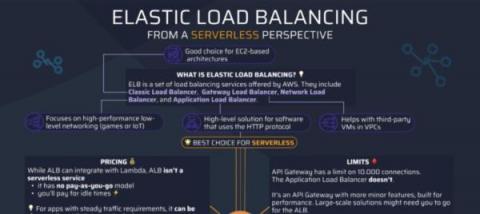
[Infographic] AWS Elastic Load Balancing from a Serverless perspective

Load balancing is a significant part of every internet-facing software, and with Elastic Load Balancing (ELB), AWS offers a set of load balancers for every use case. Since our latest update, Dashbird also gives you insights into these ELB services; let’s look at them and see how they can be used in a serverless environment.

Designing production-ready AWS serverless applications

Serverless has become an increasingly popular paradigm among organizations looking to modernize their applications as it allows them to increase agility while reducing their operational overhead and costs. But the highly distributed nature of serverless architectures requires developers to rethink their approach to application design and development. AWS-based serverless applications hinge on AWS Lambda functions, which are stateless and ephemeral by design.

Azure Service Bus Logging with BAM - Walk-through

In a previous article, we talked about how you could use BAM to do advanced management of dead lettered messages on the Azure Service Bus using a scenario like below. This article will show how you can set up this kind of example. Let’s assume your Order Processing functions are already in place, and your starting point is that sometimes you will get dead-lettered messages, and we need to implement the Send message to the BAM logic app and configure Serverless360.

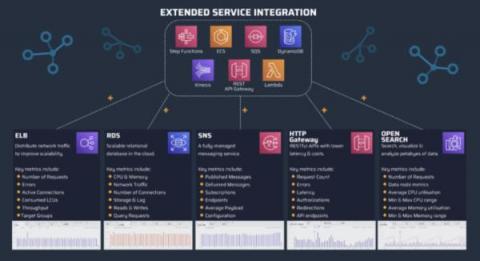
Dashbird now integrates with 5 new AWS services

TL;DR: Dashbird launches observability for five new AWS services (ELB, SNS, RDS, OpenSearch, and HTTP API Gateway) to allow for a faster, more secure, and smoother serverless observability experience. Dashbird, the leading monitoring platform for serverless AWS applications, announces five new AWS integrations.

What is an AWS Lambda Function?

In this article, we will cover the basics of a Lambda function and its functionality in our every day digital lives. AWS Lambda, as we already know, is a compute service that allows you to run code without managing servers. AWS Lambda runs the code when it is needed, and it is automatically scaled. The code you execute on AWS Lambda is called Lambda function, and it can be considered, for better understanding, as a formula in a spreadsheet.