Operations | Monitoring | ITSM | DevOps | Cloud

The latest News and Information on Serverless Monitoring, Management, Development and related cloud technologies.

The Future of Ops Careers

Have you seen Lambda: A Serverless Musical? If not, you really have to. I love Hamilton, I love serverless, and I’m not trying to be a crank or a killjoy or police people’s language. BUT, unfortunately, the chorus chose to double-down on one of the stupidest and most dangerous tendencies the serverless movement has had from day one: misunderstanding and trash-talking operations.

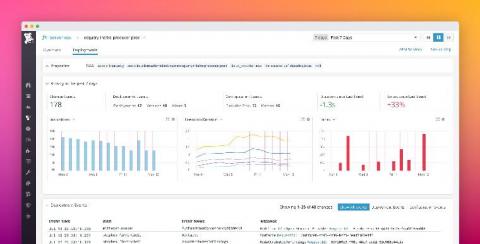
Monitor serverless configuration changes with Datadog Deployment Tracking

Serverless architectures remove the need to provision and maintain infrastructure components like servers and containers, so developers can focus on writing and deploying code. However, serverless architectures also introduce new challenges to monitoring and observability. Teams building serverless applications can iterate quickly and deploy frequent code and configuration changes, making it difficult to track what impact these changes have on your applications.

How Dashbird Atlas Accelerates Serverless Observability

Share When it comes to serverless applications, their distributed nature of exponential scalability and use of potentially thousands of resources automatically begs the need for observability. Using the mass data output of an application to understand and optimize the internal states is a game-changing strategy, but only if used well. Dashbird Atlas takes serverless observability to a new level, reducing excessive noise through simple visualization of your application.

What You Need to Know About Serverless Security

Developers at Airbnb, BBC, Netflix, and Nike all share something in common: They’re using serverless computing to ship new products and features faster than ever. And they represent a growing trend. As businesses compete to quickly deliver customer value, a whopping 60% of enterprises have already adopted, or are planning to use, serverless architectures.

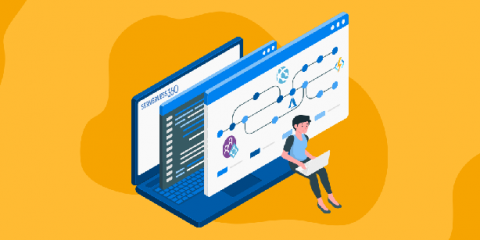
Azure Logic Apps Error Handling Using Serverless360 BAM

A few weeks ago, my good friend Josh Cook wrote a blog post for Power Automate about getting the error message when implementing the try/catch pattern with a Flow. We discussed if this could be used with Logic Apps, and Josh confirmed that it could, even though the Logic App documentation doesn’t cover it very well. Josh’s original Flow post is- Grabbing an error message from a failed run.

The Ultimate Guide to AWS Step Functions

The use of serverless computing has become a must nowadays, and some of you may already know a thing or two about Amazon Web Services like Lambda Functions, Step Functions, and other services AWS provides. However, if this is the first time you hear about them – fantastic! In this article, we’ll discuss AWS Step Functions, what they are used for, how to use them, and the advantages or disadvantages that they bring.

Going Serverless: Best Practices

Making the move to serverless architecture? By accelerating app development time, serverless isn’t just a boon for business, it’s also a win for engineering teams. Gartner explains: “Serverless architectures enable developers to focus on what they should be doing — writing code and optimizing application design — making way for business agility and digital experimentation.”

Azure Logic Apps 101 - Developer tools: what are my options (Part I)

In this three-part blog postseason, we will describe the different development tools that are available or the different development approaches that we can use to create how Logic Apps. And for each approach/tool, we will describe: First of all, and rephrase Microsoft description: Azure Logic Apps is a cloud service that automates the execution of your business processes or workflows (sequence of tasks that produce a specific outcome).

Dangers of Console-Driven Development

AWS offers the ability to login to a web UI dashboard. In this dashboard, you can add, edit, and deploy various cloud resources. When I was first getting started with AWS, this is where I began for two reasons: My very first full-time job as a Software Engineer was on a small enough team that all of our infrastructure was setup using the AWS console in a single AWS account.