Operations | Monitoring | ITSM | DevOps | Cloud

The latest News and Information on Serverless Monitoring, Management, Development and related cloud technologies.

Azure Unit Economics for Crafting a Financially Sound Strategy

Embarking on a journey through the cloud landscape, Azure Unit Economics is a compass, guiding through the intricacies of financial optimization in the realm of Microsoft Azure. This blog post aims to clarify the complexity of Azure Unit Economics, underscoring its critical role in optimizing resource allocation and ensuring cost-effectiveness within the realm of cloud computing.

Azure VM Autoscaling to enhance performance and cost efficiency

Azure VM Autoscaling is a feature provided by Microsoft Azure that allows to automatically adjust the number of Virtual Machines (VMs) in a specific scale set based on predefined criteria such as load, performance metrics, or a schedule. This post delves into the significance of autoscaling within Azure VMs, spotlighting its role in cost optimization, performance enhancement, and improved availability.

What's New in Serverless360: Databricks monitoring, Azure Cost group notifications, etc..

Serverless360's latest update, brings a suite of enhancements. It includes Databricks management, resource availability monitoring, query insights for Azure SQL, and activity log monitoring for Azure services. The Cost Analyzer offers customized rightsizing, cost group notifications, and enhanced cost data at the Service/Meter level.

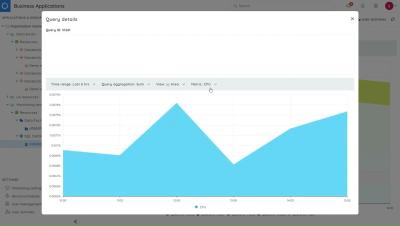
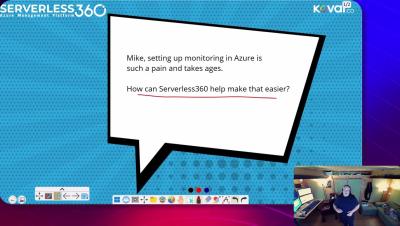
Azure Resource Monitoring: Setting Up Key Metrics Made Simple!

Setting up Azure Monitor to oversee all essential metrics and points of interest across every single Azure resource in a solution can be a challenging task. It consumes considerable time, especially when dealing with individual Azure resources, and the effort multiplies when managing numerous Azure resources. This video demonstrates how Serverless360 alleviates some of these challenges, simplifying the process of setting up effective Azure monitoring.

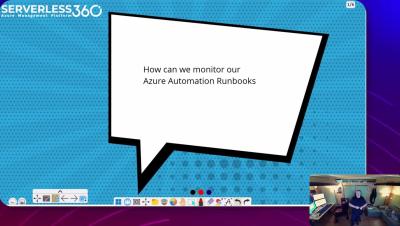
How to monitor Azure Automation Runbooks?

This video guides you through developing an Automation solution with Azure Automation accounts. The primary objective is to streamline the management and monitoring of these services for IT support operators, irrespective of their expertise in Azure. Mike demonstrates how you can add an automation runbook to a Business Application in Serverless360 to manage it alongside the other resources that make up your solution and how we can democratize some of the support to the IT support operators.

Does Step Function's new TestState API make end-to-end tests obsolete?

Step Function added support for testing individual states . Which lets you execute individual states with the following: And returns the following: With the TestState API, you can thoroughly test every state and achieve close to 100% coverage of a state machine. So, does this eliminate the need for Step Functions Local ? Can we do away with end-to-end tests as well? If not, where should this new API fit into your workflow, and how should you use it?

Azure App Service Pricing (2024)

Azure App Services, part of Microsoft Azure’s platform-as-a-service (PaaS) offerings, simplifies web application and API development, deployment, and scalability without managing underlying infrastructure complexities. Supporting various programming languages and frameworks, its versatility suits diverse applications. Understanding Azure App Services pricing is crucial for effective cost management and resource optimization.

Receive zipped messages (or files) in BizTalk Server Solutions

Welcome again to another BizTalk Server to Azure Integration Services blog post. In my previous blog post, I discussed how to send zipped messages or files. Today, we will discuss the same topic but in the opposite direction, which is also a classic requirement in legacy BizTalk Server solutions: How do you receive zipped messages (files)?

Choosing the Right Observability Tools for Developers

This is the third and final blog post in a series about shifting Observability left. If you have not yet read the first two, you can find the first post here and the second post here. Observability is fundamental to modern software development, enabling developers to gain deep insights into their application’s behavior and performance.