Operations | Monitoring | ITSM | DevOps | Cloud

Data Layout and Schema Design Best Practices for InfluxDB

Figuring out the best data layout for InfluxDB v2 is important in optimizing the resources used by InfluxDB, as well as improving ingestion rates and the performance of queries and tasks. You also want to consider developer and user experience (UX). This post will walk you through developing a schema for an IoT application example and answer the following questions.

5 reasons your network needs an advanced IP scanner

With networks continually scaling to meet business needs, advanced IP scanning has become a crucial task for network admins to ensure network availability and performance. Scanning IP addresses can be challenging in large networks, which often include wired and wireless devices with dynamic IPs, multiple DNS, DHCP configurations, and complex subnets.

Learn how monitoring VPNs enhances your remote workforce's productivity: The ITOM podcast [Episode 3]

The ITOM podcast returns with yet another episode aimed to alleviate all your remote work woes. In the last episode, we drilled into the nuances of VPN security, encryption, hashing algorithms, certification authorities, and much more. Now we’ll discuss the practical implications of VPNs on remote work. VPNs have become many organizations’ best bet to help maintain business continuity in this era of remote work.

The CMDB Stages a Comeback with Insights from AIOps

The Configuration Management Database (CMDB) has always been a tricky beast to tame, despite having a longstanding presence in enterprise IT. Originally implemented to help track and manage ever-changing IT assets, the CMDB has a checkered past but is finally ready to shed its bad reputation thanks to new technology.

DevOps 101 - Introduction to CI/CD

When you’re new to an industry, you encounter a lot of new concepts. We tend to use a lot of jargon, the documentation may be written with someone more experienced in mind or rely on contextual knowledge of the rest of the space, and it often doesn’t explain the “why” for the tool. This can make it really difficult to get your feet underneath you on an unfamiliar landscape, especially for junior engineers.

JFrog & Splunk - Observability for your IT Value Stream

As software is the product in many of today's businesses, the need to manage the value stream from development to production is critical to ensure consistency of information, compliance and supply chain collaboration.In order to consistently deliver high velocity and quality of applications, engineering teams require visibility into how code is moving from dev to prod in a stable and efficient manner. Just as Observability is changing the way teams managing their applications in production, the concepts of observability apply to the entire software value stream.

The concise guide to labels in Loki

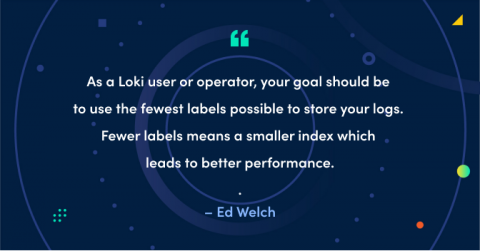
A few months ago, I wrote an in-depth article describing how labels work in Loki. Here, I’m consolidating that information into a more digestible “cheat sheet.” There are some big differences in how Loki works compared to other logging systems which require a different way of thinking. This is my attempt to convey those differences as well as map out our thought process behind them. As a Loki user or operator, your goal should be to use the fewest labels possible to store your logs.

Continuous Improvement in Native

If Sentry were a TV show, I think it would be Lassie. It’s your application’s best friend and everyone can understand it no matter what language they speak. Sentry gets help from the right people to make sure Timmy, I mean your application, is safe and sound. Over the past few months, we improved our Native SDK significantly. Most notably, we increased platform compatibility through a major rewrite from C++ to C and by switching to the CMake build system.