Operations | Monitoring | ITSM | DevOps | Cloud

Threads in Java

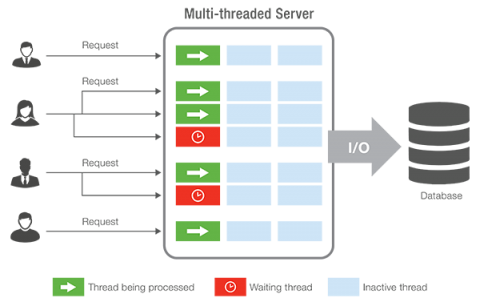
A thread, in the context of Java, is the path followed when executing a program. All Java programs have at least one thread, known as the main thread, which is created by the Java Virtual Machine (JVM) at the program’s start, when the main() method is invoked with the main thread. In Java, creating a thread is accomplished by implementing an interface and extending a class. Every Java thread is created and controlled by the java.lang.Thread class.

Rolling out Roles

We’ve been pretty lucky at incident.io to be able to avoid dealing with more complex authentication issues for quite a while, because we piggy-back on Slack to know who you are and which organisation you work in. Whole companies have been built around doing authentication and user profiles really well, so it was pretty neat to be able to avoid doing most of that work for so long!

Swarm Support Model

From a customer’s standpoint, it is always agonizing to wait for the resolution of a complaint about the product or service we have bought from a company. None of us would want to hear, “We have escalated your concern to our seniors; your patience is highly appreciated.” Let us switch to the other side of the table. Most organizations rely on a tiered approach to resolve an issue from a support perspective.

When to hire an Incident Commander

What comes to mind when you hear the term 'incident commander'? You are not alone if you think about fancy, tri-cornered hats, well-polished shoes, and a uniform weighed down by medals. The roles of incident commander, incident manager, or technical escalation manager have been typical in large organizations but are gaining popularity in smaller companies. For the purposes of this article, we will use the term 'incident commander,' but any of the above titles could work.

How to Implement Global View and High Availability for Prometheus

Ensuring that systems run reliably is a critical function of a site reliability engineer. A big part of that is collecting metrics, creating alerts and graph data. It’s of the utmost importance to gather system metrics, from several locations and services, and correlate them to understand system functionality as well as to support troubleshooting.

Shifting Left for DevSecOps Success

Catch this session to see exactly what does “shift left” security mean? More importantly, how does this strategy affect a developer’s workflow? In this workshop we walk attendees through the steps of setting up an end-to-end DevSecOps solution to automate your build artifact storage, vulnerability detection, testing, and deployment. Lastly, attendees learn how to take advantage of JFrog’s IDE integration and JFrog XRay to increase your confidence in the security of your application, all within a freely available DevSecOps environment!

How to Detect Network Congestion | Obkio

Network Congestion, similar to road congestion, occurs when your network cannot adequately handle the traffic flowing through it. While network congestion is usually temporary, it can cause annoying network problems that can affect performance and can be a sign of a larger issue in your network. That's why you need an end-to-end monitoring tool to help you proactively detect network congestion. Obkio Network Monitoring continuously monitors end-to-end network performance from your local network (LAN, VPN), as well as third-party networks (WAN, ISP, and Internet Peering).

Application Discovery with DX Unified Infrastructure Management

Having any form of application discovery can be of great benefit. With these capabilities, you can determine what is deployed within your infrastructure and better understand what monitoring to apply to each device. When you know which applications are running within your environment, you can group devices by their associated applications.