On June 8, 2021, many of us were left staring at blank screens or “Service Unavailable” errors when trying to access the internet. The panic was shared by millions of people around the world. Everything from Spotify, Amazon, and Reddit to Vimeo, Twitch, and Pinterest was inaccessible to users. This major outage that impacted any service using Fastly. Here is a quick rundown of what happened and why.
In an earlier blog post, we spoke about building your own ProblemChild framework from scratch in the Elastic Stack to detect living off the land (LOtL) activity. As promised, we have now also released a fully trained detection model, anomaly detection configurations, and detection rules that you can use to get ProblemChild up and running in your environment in a matter of minutes.
Ten times faster at a fraction of the cost. If you want a headline as to why you should consider adopting Elastic for security and observability, that is it. We often work with our customers to help them establish the business value of Elastic within their organizations. We commissioned Forrester to conduct a Total Economic Impact (TEI) study of our security and observability solutions so our customers have an unbiased view that they can share with their internal stakeholders.
Organizations require a well-crafted clinical communication plan to streamline workflows across care teams. The communication plan must include processes, hardware and software that improves how providers perform. An effective communication plan eliminates barriers across departments and ensures that all providers are informed of patient-related incidents. High-level healthcare administrators are responsible for designing, managing and launching the clinical communication plan.
This is the seventh chapter in a series of blog posts exploring the role that intelligent observability plays in the day-to-day life of smart teams. In this chapter, our DevOps Engineer, Sarah, experiments with low code and Moogsoft in her team’s DevOps toolchain to rush a new feature out the door to keep up with a competitor.
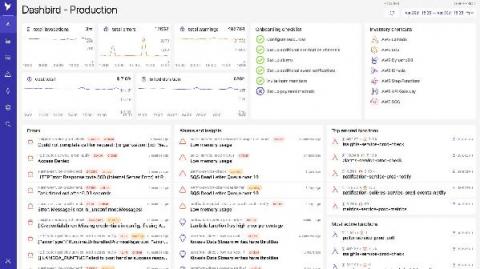
The new Dashbird app is bringing your data together for a faster, more secure, and smoother observability experience with team collaboration in mind. The enhanced version of the Dashbird app is making your account more secure and your app navigation and data exploration faster, more intuitive, and all-around enjoyable. Additionally, you can now enable multi-factor authentication (MFA) for your Dashbird account. Check it out now!
Kubernetes just turned 7 years old, and over the last couple of years, it has risen in popularity to be the key platform for microservices management consistently. The ecosystem around it is also growing rapidly.
At Splunk, we’re constantly on the hunt for new and emerging threats — tirelessly developing detection techniques to zero in on bad actors, while sharing key intelligence around cybercrime activity. But because threat intelligence can relate to so many different things — ranging from spear phishing campaigns to dark web dealings — it can be a challenge to cover and define all the specifics of what (or who) to look out for.
Today’s business is powered by data. Success in the digital world depends on how quickly data can be collected, analyzed and acted upon. The faster the speed of data-driven insights, the more agile and responsive a business can become. Apache Kafka has emerged as a popular open-source stream-processing solution for collecting, storing, processing and analyzing data at scale.