Tip and Tricks with SIGNL4 and ConnectWise
Detailing some tips and tricks on using the SIGNL4 and ConnectWise connector.


Vulnerabilities within an IT environment pose a big security risk and are a threat to digital data within an organization. These vulnerabilities can be exploited by others, or a lack of necessary precautions can result in damaged or lost organizational data. Therefore, it is essential to have a vulnerability management process in place for these reasons.
For those who missed the live conversation, we had a great chat with Nana Janashia around taking the next click in with Kubernetes. As one of the great equalizers between the development and operations teams, Kubernetes has a duality of generics and opinions to power your workloads. This duality can be a complex one to navigate not only dealing with a new paradigm of idempotency and ephemerality but also dealing with a vast amount of choice and seemingly granular.
What’s the saddest log line in the multiverse? A log line without context. That’s according to Grafana Labs software engineer and Grafana Loki tech lead Ed Welch, who joined Grafana Labs VP of Culture Matt Toback and Engineering Director Mat Ryer for the latest episode of “Grafana’s Big Tent," our new podcast about people, community, tech, and tools around observability.
There are many different ways to run a Kubernetes cluster, from setting everything up manually to using a lightweight distribution like K3s. K3s is a Kubernetes distribution built for IoT and edge computing and is excellent for running on low-powered devices like Raspberry Pis. However, you aren’t limited to running it on low-powered hardware; it can be used for anything from a Homelab up to a Production cluster.
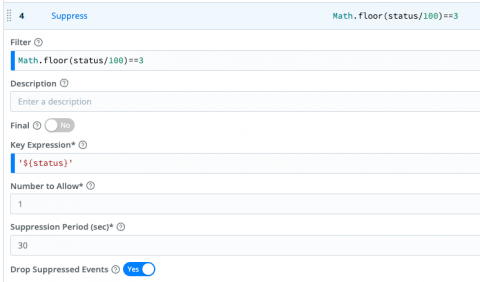
One of Cribl Stream’s selling points is the reduction of ingested log volume, which helps our customers control costs and improve system performance. This can be accomplished in two ways – either by eliminating duplicate or unnecessary fields and null values within the events, or controlling the number of specific events that actually get sent to the destinations through strategic filtering.
When looking for a highly scalable time series database, there are a number of criteria to investigate and evaluate. First up, it’s always a good idea to consider open source software. It’s more likely to have gone through comprehensive troubleshooting, it’s typically more reliable as it has more timely and widespread peer-review, it better guarantees technology independence, it’s easier to find engineers who are familiar with it and it has great security.