Since the onset of the pandemic and the changes in working patterns that resulted from it, employee welfare has been boosted to the top of the agenda, with this new mindset seeming to be lasting. According to the UK’s Chartered Institute of Personnel and Development, 75% of employees believe senior leaders prioritize well-being as part of business operations.
Over the last couple of decades, a lot has changed in terms of how companies are running their infrastructure. The days of dedicated physical servers are long gone, and there are a variety of options for making the most out of your hosts, regardless of whether you’re running them on-prem or in the cloud. Virtualization paved the way for scalability, standardization and cost optimisation. Containerization brought new efficiencies.
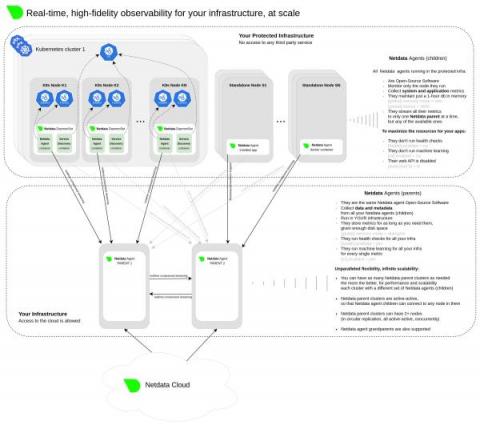
Find out how to effectively and easily monitor and troubleshoot NTPdaemon using Netdata.
Whether operations are running smoothly or you’re running into a number of hiccups, the question to IT is always the same – “What do we even pay you for?” Rather than viewing IT as a vital piece of the puzzle, organizations often view IT as a cost center, leading to warped perceptions of the importance of IT.
As the recruitment team here at Grafana Labs, we used to struggle to get a comprehensive view of our recruitment data. We had multiple sources of information, but it was difficult to pool that information so we could see the big picture and identify trends and patterns that could help us hire the right talent in a highly competitive market.
This article was originally published in The New Stack and is reposted here with permission. A consequence of living in a rapidly changing society is that the state of all systems changes just as rapidly, and with that comes inconsistencies in operations. But what if you could foresee these inconsistencies? What if you could take a peek into the future? This is where time-series data can help.
As the person on the front lines, you know that providing the best service possible can be what makes your ITSM organization succeed. Every day, you work to build the relationships that help your organization create value for end-users. However, when you have inefficient processes, you end up having to be the person responding to an upset user.