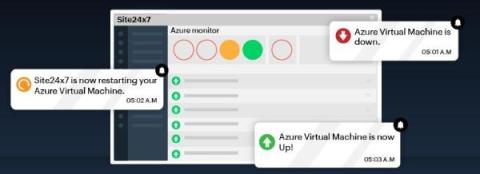
The transition from traditional on-premises IT infrastructure to the public cloud has brought substantial relief to IT decision-makers and sysadmins. Since many organizations use Microsoft Windows as their preferred operating system, Microsoft Azure has become the public cloud provider of choice automatically owing to a familiar GUI and Active Directory sync.
Distributed systems, such as modern microservices-based applications, are highly scalable, but also highly complex. Dependencies and unexpected interactions between services are a common cause of incidents, and these incidents are also notoriously hard to test for. xk6-disruptor — an extension that adds fault injection capabilities to Grafana k6, the open source reliability and load testing tool — can help overcome these challenges.
If you think you might be outgrowing your current remote monitoring and management (RMM) platform, this RMM health checklist will help you pinpoint whether it’s time to change. Even if you’re not at that point yet, running through this process regularly will help ensure that you don’t let things drag on longer than you need to if there is an issue.
Once upon a time, employment dictated where you lived. This widespread understanding led to a networking effect that amplified the appeal of cities. Cities, in turn, attracted skilled individuals, providing companies with a compelling incentive to establish a presence there and thereby draw even more talent. Notable locales like New York, Los Angeles, and Silicon Valley emerged as epicenters for high-caliber talent and the organizations that employed them.
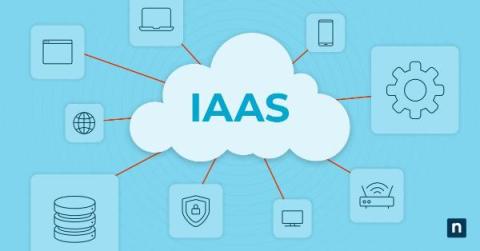
In the ever-evolving landscape of cloud adoption, resource virtualization has emerged as a transformative force, revolutionizing the way businesses operate and offer services. At the heart of this revolution lies the concept of Infrastructure as a Service (IaaS), which offers a spectrum of service models designed to meet the diverse needs of every company.