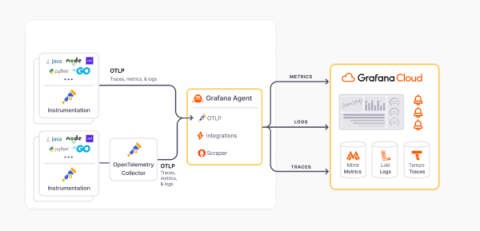
AWS’s serverless technologies are popular because they provide cost effective scaling and great separation of concerns. However, observing serverless architectures like Lambda is challenging due to their transient nature and abstracted infrastructure. Unlike traditional systems with consistent hosts, serverless functions are ephemeral, often scaling rapidly and operating in isolation.
Icinga 2.14 introduced a new feature that allows to better model complex dependencies between your hosts and services: redundancy groups. Let’s take an e-mail server as an example. In order to deliver outgoing messages, it has to look up the addresses of the destination servers and relies on DNS for doing so. For incoming messages, it has to know which accounts exist and in a corporate environment, this typically means looking up user accounts in a directory service like LDAP.
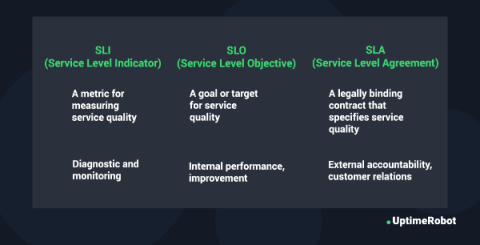
When it comes to managing services effectively, terms like SLA, SLO, and SLI are often thrown around like confetti at a parade. They’re in meetings, in documents, and even in casual office conversations. But if you’re new to the field or simply haven’t had the chance to dig into these acronyms, they can feel like a bewildering alphabet soup. And they can’t be missing on an uptime monitoring blog such as ours! So, what do these terms really mean?