With more than 1.5M room nights booked per day, Booking.com requires a solid infrastructure that’s constantly monitored. And indeed, Booking.com now has a footprint of 50,000+ physical servers running across four data centers and six additional points of presence. The sheer size of this server fleet makes it viable for Booking.com to have dedicated teams specializing into looking only at the reliability of those servers.
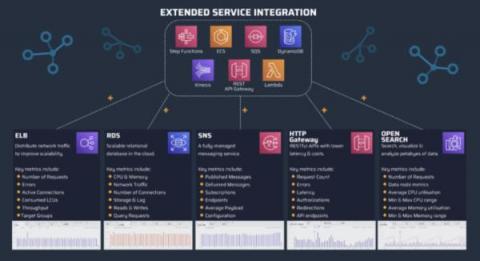
TL;DR: Dashbird launches observability for five new AWS services (ELB, SNS, RDS, OpenSearch, and HTTP API Gateway) to allow for a faster, more secure, and smoother serverless observability experience. Dashbird, the leading monitoring platform for serverless AWS applications, announces five new AWS integrations.
There is a lot of the art of the possible between the GitOps Engine, Argo CD, and the Application-as-Code platform, Shipa. In a recent blog post, we outlined the power of a one-line developer experience. Though if you are unfamiliar with ArgoCD, here is a guide to get you started with Argo CD and leveraging Shipa for your first deployment.
In my prior blog, Continuous Service Virtualization, Part 1: Introduction and Best Practices, we offered an introduction to continuous service virtualization (SV) and discussed some key best practices. In this, the second and final post in the series, we will discuss the continuous SV lifecycle and how it helps to optimize DevOps and the continuous integration/continuous delivery (CI/CD) pipeline.
Service virtualization (SV) has evolved as a popular technique and technology over the last decade. Traditionally, SV has primarily been used by testers to simulate other application components that the application under test interacts with. Typically, virtual services have been created and maintained by center of excellence (COE) teams.
As time progresses and competition grows, being “good enough” means that you may be falling behind. Engineers will discover new ways to solve problems, which will enable rapid increases in availability and scalability. With these increases comes more complexity and the generation of more data. Rather than just monitoring the new data and letting the old data sit there collecting dust, you should consider using it to gain maximum insights into your environment.
The manufacturing skills gap is projected to leave more than 2 million jobs unfilled by 2030, costing the US economy as much as $1 trillion, according to a report by Deloitte and The Manufacturing Institute. When COVID-19 hit, about 1.4 million people lost manufacturing jobs, according to the report. Although the industry has hired back many workers, hundreds of thousands of positions remain unfilled. On top of layoffs, workers are retiring en masse.