It takes 50 milliseconds for visitors to decide whether to bounce from your website, that’s.05 seconds, or about half the time it takes you to blink. In website monitoring we talk a lot about uptime, and while making sure your site returns 200 OK is important, if your load time isn’t instant you’ll lose traffic regardless.
Welcome to the 5th edition of Open Source Matters: our regular publication about the latest happenings in open source! Let’s dive into the news.
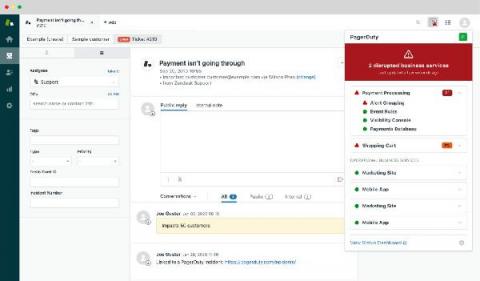
Ask any DevOps engineer, and they will tell you about all the alerts they enable so they can stay informed about their code. These alerts are the first line of defense in the fight for Perfect Uptime SLA. With every good solution out there, you can find plenty of methods for alerting and monitoring events in the code. Each method has its own reasons and logic for how it works and why it’s the best option. But what can you do when you need to connect two opposing methodologies? You innovate!
This series shows you how to get started with infrastructure as code (IaC). The goal is to help developers build a strong understanding of IaC through tutorials and code examples. In this post, I will demonstrate how to create continuous integration and deployment (CI/CD) pipelines that automate the Terraform IaC deployments covered in part 1 and part 2 of this series. Here is a quick list of things we will accomplish in this post.
Securing a cloud-native environment, such as SUSE Rancher, requires unique considerations. New abstractions like containers, plus the dynamic nature of a Kubernetes orchestrated environment can hamper visibility, especially for legacy tools that aren’t designed for containers and cloud. To help, Sysdig and SUSE have launched a SUSE One Partner Solution Stack designed to not only showcase our joint solution, but also to provide easy ways for you to get started.
Distributed tracing has been growing in popularity as a primary tool for investigating performance issues in microservices systems. Our recent DevOps Pulse survey shows a 38% increase year-over-year in organizations’ tracing use. Furthermore, 64% of those respondents who are not yet using tracing indicated plans to adopt it in the next two years. However, many organizations have yet to realize just how much potential distributed tracing holds.
With Microsoft Teams usage continuing to increase, it was only a matter of time until we also saw the rise of Teams voice through PSTN. Even though this requires more expensive Microsoft 365 licenses, the return on investment can be significant purely based on the pricing structure but sizable savings can be realized when it comes to management overhead costs. However, it can be a challenge to ensure PSTN call quality for all your business lines and users.
Error-free apps are envied by all software teams today. But building and maintaining such an app is not as easy as it looks. You need to constantly keep a check on your app to see when it faces exceptions or errors. This is why we have so many error tracking tools in the current market. Rollbar is a popular error monitoring tool used for tracking and fixing all types of bugs and errors in modern applications. However, it has shortcomings too.