Operations | Monitoring | ITSM | DevOps | Cloud

Adopting an Agile Workplace for the 'New Normal' at Taylor Vinters

There has been a significant amount of change in the IT industry over the past 25 years, from the integration of email, the move to laptops over desktops and the introduction and transition to cloud computing. However, nothing compares to witnessing the rapid change and innovation businesses have adopted throughout the pandemic, including ourselves. Agility, adapting to survive


How To Set Up An Integration With ServiceNow

For this Tech Tip, we’re going to look at more ways you can integrate Catchpoint Alerts into your existing tool ecosystem (check out our recent video on integrating with Slack!). In this new, distributed workforce, employees are using more SaaS tools than ever. It’s important to identify how consolidating data can benefit key workflows – in this case, the ones for your IT support team.

Incident Communications With Alina Anderson

Incidents happen. They’re disruptive, they can be stressful, and if they aren’t managed well, they can cause chaos on your team. How your team manages incidents is only half the battle. How you let other stakeholders know what is going on is the other half. Alina Anderson from Smartsheet joined the Community team in our booth this year at PagerDuty Summit to talk about Incident Communications, and we’ve shared that conversation as an episode of our Page It to the Limit podcast.

Kick off 2021 by learning Elastic solutions with free 15-minute guides

Elastic solutions solve many different business challenges from powering search bars to creating observable systems to detecting and responding to threats. And with the amount of capabilities each offers, learning how to maximize the power of our solutions for enterprise search, observability, and security is critical to realizing Elastic's full value. But finding the time to build new skills can be challenging.

What's in store for IT Ops in 2021? Top execs from leading enterprises share their predictions

2020 is (finally) over, and it’s safe to say that this very challenging year taught us once again that (as the old Danish proverb says) it’s difficult making predictions, especially about the future. Who would have imagined in January 2020 that we would find ourselves where we are today… And yet, as Tim Harford once wrote in the Financial Times, predictions are like Pringles: nobody thinks that there’s any great virtue in them but we find them hard to resist.

Not Another New Year's Resolution

I hope I’m not alone in starting 2021 with some sense of optimism. While several hard months remain ahead of us, I am hopeful and also expecting that some sense of normality will return by the summer months. Either way, this gives us an opportunity to reflect on the challenges we have faced. 2020 was testing. We learnt a lot about ourselves and our businesses in the most challenging of circumstances.

A look back at 2020

2020 was, needless to say, not the best. Looking on the brighter side, in December, FireHydrant turned 2, and in spite of it all, we grew quite a bit. We raised our $8M Series A in May, our team grew nearly 4x in size, added some amazing features such as making FireHydrant Runbooks even more powerful with conditions, and great integrations, which you can find here. But even better, we got to work with all of you!

Embracing Open Source data collection

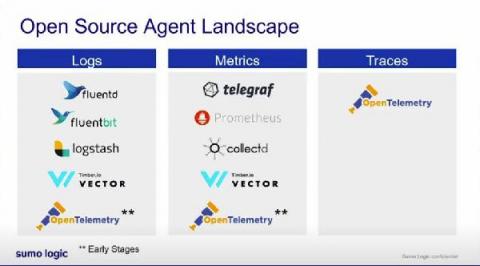
Open source has come a long way. One of my favorite reports on the subject is Red Hat’s State of Enterprise Open Source. For 2020, 95% of respondents said that open source is strategically important to their business needs. Here, I will be recapping my recent Illuminate presentation about embracing open source data collection and I thought it’s important to first talk about how open source has changed.

2020 Magecart Timeline

In this blog, we break down the timeline of the number one hacker threat to ecommerce sites today – Magecart. The 2020 Magecart timeline includes all the significant Magecart attacks in 2020. With 4,800 formjacking attacks each month alone, this timeline only represents a small proportion of attacks reported in the public domain in 2020.