Operations | Monitoring | ITSM | DevOps | Cloud

How Prometheus monitoring mixins can make effective observability strategies accessible to all

Three years ago, Tom Wilkie and Frederic Branczyk sketched out the idea for Prometheus monitoring mixins. This is a jsonnet-based package format for grouping and distributing logically related Grafana dashboards with Prometheus alerts and rules. The premise was that the observability world needed a way for system authors to not only emit metrics, but also provide guidance on how to use those metrics to monitor their systems properly.
Healthcare IT responds to pandemic with increased focus on database monitoring and the cloud

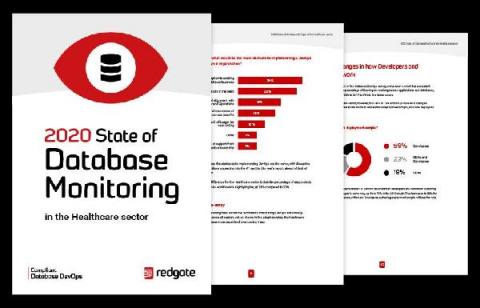
Every year, Redgate’s State of Database Monitoring Report reveals how businesses and organizations are monitoring their database estates. Are they using in-house or third-party monitoring tools? Who has access to the data? What are their biggest challenges? The thousands of responses to the survey behind the report offer the answers, and also provide an opportunity to dive deeper and examine those issues at an industry sector level.

Creating Custom Plugins Using The Snap Framework

SolarWinds® AppOptics™ was designed from the ground up as a SaaS-based APM tool for cloud-native and traditional IT implementations. It provides out-of-the-box monitoring for applications and infrastructure through simple-to-install APM libraries and host agents. AppOptics makes it easy for multiple teams to quickly assess the health and performance of your applications regardless of how or where they are implemented.

Why Cross-Domain Topology Seems Too Good To Be True

There are some things in life that seem too good to be true. So good, in fact, that they border on the edge of mythology. We see this often in the case of Cross-Domain Topology. Cross-Domain Topology ties together all the pieces of a hybrid, dynamic IT environment, so you can instantly see how changes impact your environment. It’s something that a lot of people didn’t even think was a possibility. While unicorns are myths, Cross-Domain Topology is very real. Here’s how it works.

Extending the Zero-Trust Security Framework to Your Home

Mixing your personal and work devices while connected to your home network and accessing the Internet is a risky proposition from a security and privacy standpoint. Why? I frequently monitor my firewall logs. What I observe on my WAN interface are blocked IP addresses sourced from adversarial nation states which makes the hair on the back of my neck stand up.

Icinga 2 Config Language (DSL): Advanced Apply Rules

As many users of Icinga don’t know what the DSL has to offer, I’m going to show you how to use custom variables and apply for rules to make your life easier when writing configuration for your Icinga environment. In this example we will use custom variables on a host to configure a dynamic set of services to monitor multiple web services behind a reverse proxy. On the host we define a custom dictionary called http_vhosts and assign our virtual hosts to it.

Doubling down on open, Part II

We are moving our Apache 2.0-licensed source code in Elasticsearch and Kibana to be dual licensed under Server Side Public License (SSPL) and the Elastic License, giving users the choice of which license to apply. This license change ensures our community and customers have free and open access to use, modify, redistribute, and collaborate on the code.

Why Your Website Host's "100% Guaranteed Uptime" Promise is Bogus - and What to Do About It

It’s been said that the devil is in the details. Well, along the same lines — and as we all know from miserable experience — when it comes to guarantees, the devil is in the small print. And there’s no better (or worse) example of this than with respect to the gleaming, confidence-inspiring claim by web hosts that they deliver 100% guaranteed uptime. Except, well, they don’t.

Debugging with Dashbird: Malformed Lambda Proxy Response

One problem that pops up quite frequently when people try to build serverless applications with AWS API Gateway and AWS Lambda is Execution failed due to configuration error: Malformed Lambda proxy response. There is nothing worse than generic error messages that don’t tell you anything you need to fix the problem, right? And AWS isn’t particularly known for its error message design, if you can even call it that, let alone for giving you the means of fixing the problem.