Operations | Monitoring | ITSM | DevOps | Cloud

Clearing the Air: What Is Cloud Native?

If you have had any exposure to cloud computing or app development in recent years, you likely have heard the term “cloud native” thrown around. But you might be wondering what exactly that term means, and how it differs from concepts such as “cloud ready” or “cloud enabled.” As a cloud-native service provider, Sumo Logic understands the architecture underpinning this development model. Let’s take a closer look at the cloud-native concept and what it means.


Securing your Docker containers

One of the many challenges when building an application is ensuring that it's secure. Whether you're storing hashed passwords, sanitizing user inputs, or even just constantly updating package dependencies to the latest and greatest, the effort to attain a secure application is never-ending. And even though containerization has made it easier to ship better software faster, there are still plenty of considerations to take when securing your infrastructure as well.

Announcing $52 Million Series D Funding to Unleash the Value of Machine Data and Open-Source

Today I have the immense privilege of sharing the exciting news that we have raised $52M in series D funding led by General Catalyst. I am thrilled that all of our existing investors share our vision and chose to invest further in the company.

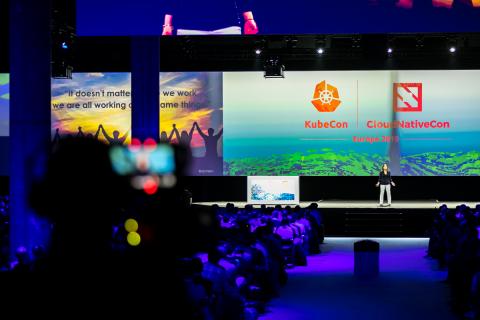
Grafana Labs at KubeCon: Foolproof Kubernetes Dashboards for Sleep-Deprived On Calls

We’ve all been in the situation where suddenly you are the lone developer on call while everyone is out of pocket. Or in the case of Grafana Labs Director of UX David Kaltschmidt, his then business partner, Grafana Labs VP of Product Tom Wilkie, was checking out for a weekend music fest. “Tom and I founded a company a couple of years ago, and I’m more of a frontend person. Tom did all the backend and devops stuff,” explained Kaltschimdt.

The Twistlock Acquisition: An Analysis of Palo Alto Networks' strategy

Congratulations Twistlock! One of the best signs of an emerging market is when existing, massive players are willing to put hundreds of millions of dollars on the line to get into that market right now. Given today’s Twistlock acquisition by Palo Alto Networks, and other recent acquisitions like Heptio/VMware, we believe this is happening in the cloud-native market. Congratulations to Twistlock on their success.

How To Manage Kubernetes with Kubectl

The mechanism for interacting with Kubernetes on a daily basis is typically through a command line tool called kubectl. kubectl is primarily used to communicate with Kubernetes API servers to create, update, delete workloads within Kubernetes. The objective of this tutorial is to provide an overview of some of the common commands that you can utilise, as well as provide a good starting point in managing Kubernetes.

Docker and Kubernetes in high security environments

Container orchestration and cloud-native computing has gained lots of traction the recent years. The adoption has increased to such level that even enterprises in finance, banking and the public sector are interested. Compared to other businesses they differ by having extensive requirements on information security and IT security. One important aspect is how containers could be used in production environments while maintaining system separation between applications.

How I decimated Postgres response times for my SaaS

Last week I rolled out a simple patch that decimated the response time of a Postgres query crucial to Checkly. It quite literally went from an average of ~100ms with peaks to 1 second to a steady 1ms to 10ms. However, that patch was just the last step of a longer journey. This post details those steps and all the stuff I learned along the way. We'll look at how I analyzed performance issues, tested fixes and how simple Postgres optimizations can have spectacular results.