Operations | Monitoring | ITSM | DevOps | Cloud

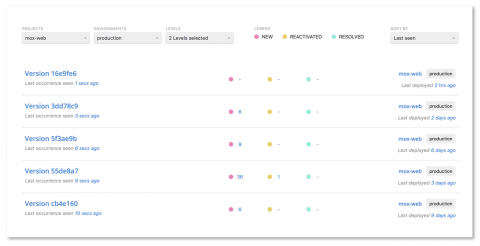
Introducing Versions

We built Versions for customers who are adopting software development practices like Continuous Delivery. One important habit to cultivate when you're seeking to adopt Continuous Delivery is to deploy early and often. This is easier to do when you have a tool like Rollbar that allows you to see all production errors instantly and quickly prioritize and debug them as needed. With Versions, we're making it even easier for you to use Rollbar to monitor errors from code revisions you've just deployed.

The honeybadger gem 4.0 has been released!

Last week we released version 4.0.0 of the honeybadger Ruby gem. This release includes a long-awaited feature which makes it even easier to customize your error reports before they are sent to Honeybadger. We also did some much-needed refactoring, and made a few removals and deprecations for good measure. Don't worry, though—most of the API remains unchanged, so upgrading should be a relatively painless process for most users.

Course 101: Instrumentation, Software Metrics, Monitoring, Alerts

Since the 1920s, higher education institutions have been using this term to describe the nomenclature of the early years of study. Here we announced some time ago our intentions to focus on tutorials, but we believe that as knowledge is important, we have brought you different kinds of articles because we consider that wisdom is a valuable asset (we include a source for some online encyclopaedias).

Dump Google Analytics and use Ahoy to track your Rails app traffic

StatusGator is built on Ruby on Rails, a popular choice for rapid web application development for more than a decade. One of the many benefits of Rails is its rich ecosystem of open source gems which can provide massive value quickly. We discovered one such gem, Ahoy, on our recent quest to understand how our users find out about StatusGator.

Purdue University's Retired .NET Peer Review App & the Path to Error Monitoring

In A Comedy of Errors, we talk to engineers about the weirdest, worst, and most interesting application and infrastructure issues they’ve encountered (and resolved) over the years. This week, we hear from Jason Dufair, Full Stack Developer on the Studio team at Purdue University.

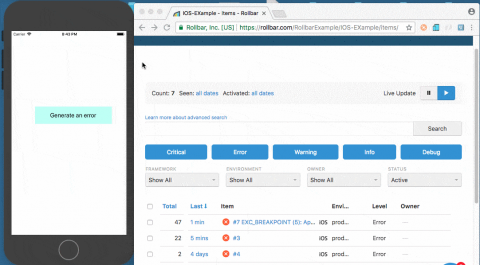
Error Monitoring in iOS

In mobile apps, it’s important to monitor errors so you can understand your user’s experience. Your team should know quickly when there are problems with the app itself or your backend services so you can fix the issue before more customers are affected. We’ll show you how to handle errors in iOS apps. We’ll then show you how Rollbar error monitoring can give you better visibility into errors and help you troubleshoot them faster.

How to collect, customize, and manage Rails application logs

Logging is an important part of understanding the behavior of your applications. Your logs contain essential records of application operations including database queries, server requests, and errors. With proper logging, you always have comprehensive, context-rich insights into application usage and performance. In this post, we’ll walk through logging options for Rails applications and look at some best practices for creating informative logs.