From a customer’s standpoint, it is always agonizing to wait for the resolution of a complaint about the product or service we have bought from a company. None of us would want to hear, “We have escalated your concern to our seniors; your patience is highly appreciated.” Let us switch to the other side of the table. Most organizations rely on a tiered approach to resolve an issue from a support perspective.
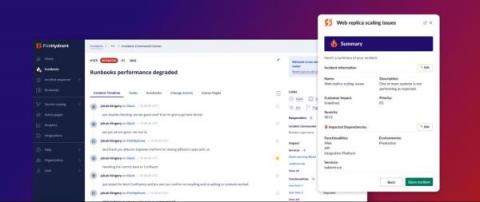
What comes to mind when you hear the term 'incident commander'? You are not alone if you think about fancy, tri-cornered hats, well-polished shoes, and a uniform weighed down by medals. The roles of incident commander, incident manager, or technical escalation manager have been typical in large organizations but are gaining popularity in smaller companies. For the purposes of this article, we will use the term 'incident commander,' but any of the above titles could work.
Having any form of application discovery can be of great benefit. With these capabilities, you can determine what is deployed within your infrastructure and better understand what monitoring to apply to each device. When you know which applications are running within your environment, you can group devices by their associated applications.
While relational database management systems (RDBMS) are efficient with storing tables, columns, and primary keys in a spreadsheet architecture, they become inefficient when there’s a lot of data input received over a long period of time. Databases designed specifically to store time series data are known as time series databases (TSDB). For example, an RDBMS might look like this.
Implementing predictive maintenance is not an easy task. To execute it professionally, organizations need to go from several predictive maintenance challenges. What are those challenges? What are the advantages of predictive maintenance or how it will be beneficial for your organization? What is predictive maintenance anyway? You will find answers to all these questions in this blog. So, let us begin!